
Recurring cleaning for empty nesters and retirees means a professional cleaning team visits on a set schedule (weekly, every other week or monthly) and takes over the physically hardest chores: floors, bathrooms, high dusting and the rooms nobody uses anymore. That way you keep the home you love without the ladder, the mop bucket or a lost Saturday. Good house cleaning for seniors isn’t about doing less for yourself. It’s about choosing which jobs are worth your time and your knees. This guide is for couples whose kids have moved out, people settling into retirement, and adult children arranging help for a parent. It covers which tasks to hand off, how often a smaller household needs a visit, what it costs in Wisconsin, whether Medicare pays for any of it, and what to ask before anyone cleans your home.
Key Takeaways
- Wisconsin had the highest fall death rate for adults 65 and older in the U.S. in 2023: 158.4 per 100,000, compared with 69.9 nationally.
- Medicare doesn’t pay for homemaker cleaning that isn’t part of a home health care plan.
- A cleaning service and a home-care aide do different jobs: one cleans the house, the other helps with personal care.
- In Green Bay, scheduled maintenance cleans typically run $120–$280 per visit, and an initial deep clean $200–$500+.
- Smaller households often do well with visits every other week or once a month, with no long-term contract.
Why Recurring House Cleaning Makes Sense After the Kids Move Out
When the kids leave, the daily mess shrinks. There are fewer dishes, fewer muddy shoes and no more hockey bags in the hallway. The house, though, stays exactly the same size. You still have the same square footage to vacuum, the same two or three bathrooms to scrub and the same staircase to carry the vacuum up. Spare bedrooms still collect dust even when no one sleeps in them, and the basement rec room still needs attention a few times a year.
Retirement changes the math too. Time you once spent commuting is now yours, and most people would rather spend it on travel, grandkids, volunteering or the garden than on scrubbing grout. That’s why many people start looking at cleaning services for seniors well before they actually need help. Paying for recurring house cleaning is an easy way to buy back hours each month.
There’s also a longer-term reason. Most people want to stay in their own homes and keep their independence as they get older. The National Institute on Aging calls this aging in place, and it lists household chores like housecleaning, yard work and laundry among the kinds of help worth planning for ahead of time. NIA also notes that family, friends and neighbors are the biggest source of help for many older people. A cleaning service takes that one recurring chore off the family’s plate.
The best time to set this up is while you’re active and healthy, not after a fall or a hospital stay forces the decision. You choose the schedule and the priorities, and you stay in charge of your own home. If you’re still weighing the cost against the benefit, our breakdown of whether recurring cleaning is worth it walks through the honest pros and cons.
The Cleaning Tasks That Get Harder — and Riskier — With Age
Not every chore is worth handing off. The ones that are tend to involve reaching overhead, kneeling, carrying weight or walking on wet floors, which are the same situations the National Institute on Aging flags in its room-by-room guide to preventing falls at home. The table below pairs common cleaning tasks with NIA’s safety points and suggests which ones to keep.
| Task | Why It Gets Harder | NIA Safety Point | Hand It Off or Keep It? |
|---|---|---|---|
| High dusting: ceiling fans, light fixtures, top shelves | Needs a step stool and reaching overhead | Don’t stand on a chair; a step stool should be steady, have a handrail, and someone beside you | Hand off |
| Mopping hard floors | Bending, pushing a bucket, wet surfaces | Don’t walk on slippery, newly washed floors | Hand off |
| Scrubbing tubs and showers | Kneeling and leaning over wet surfaces | Use nonskid mats or strips on surfaces that get wet | Hand off |
| Vacuuming stairs | Carrying a vacuum on the steps | Hold the handrail; don’t let what you carry block your view of the steps | Hand off |
| Moving furniture to clean under it | Lifting and twisting | Arrange furniture so it isn’t in your walking path | Hand off |
| Wiping a spill or a quick counter wipe | Low effort, quick | Clean up spills immediately | Keep it |
The pattern is simple. Keep the light, daily habits, like wiping up a spill the moment it happens, and get cleaning help for seniors with the heavy, wet and overhead work. None of this means you can’t mop a floor. It means a fall from a step stool while dusting a ceiling fan is a bad trade for a chore someone else can do in ten minutes.
Why Fall Prevention Matters More in Wisconsin
According to the CDC’s older adult falls data, more than one out of four people aged 65 and older falls each year, and falling once doubles your chances of falling again. Older adult falls lead to about 4.5 million emergency department visits a year. For Wisconsin residents the numbers are sharper still. A 2025 report from the CDC’s National Center for Health Statistics, NCHS Data Brief No. 532, compared unintentional fall death rates for adults 65 and older state by state.
| Area | Deaths per 100,000 Adults 65+ (2023) |
|---|---|
| Wisconsin (highest state) | 158.4 per 100,000 |
| United States | 69.9 per 100,000 |
| Alabama (lowest state) | 29.5 per 100,000 |
Wisconsin’s rate is more than double the national figure. The report doesn’t explain why, and a cleaning service can’t prevent every fall. What we do see in Wisconsin homes is months of tracked-in snow, slush and road salt that make entryways and kitchen floors slick from November to March. That’s exactly why keeping floors clean of salt and slush through a Wisconsin winter is part of a good recurring plan. Clear walkways, dry floors and not climbing on step stools are the parts of fall prevention that are within everyone’s reach.
What Senior Cleaning Services Include on a Regular Visit
Senior cleaning services from a cleaning company look much like any standard recurring visit. The difference is in how the plan is set up: which rooms get priority, which extras matter most and how the visit fits your routine. A typical recurring cleaning service covers:
- Kitchen: countertops, sinks and the outside of appliances.
- Bathrooms: toilets, showers and tubs, sinks and mirrors.
- Bedrooms and living areas: dusting surfaces, furniture and light fixtures, plus general tidying.
- Floors: vacuuming and mopping throughout the home.
- Trash: emptying bins in every room.
Optional extras you can add on request include changing bed linens, wiping baseboards and extra attention to pet areas. Fresh sheets are worth adding if bed-making has become a chore, since stripping and remaking a bed means lifting mattress corners and a lot of bending. If you’d like help with laundry, organizing or anything else not listed, ask when you set up the plan so the checklist reflects it. Good house cleaning services for seniors are built around a written checklist for your home, so every visit covers what you agreed on.
Build the Plan Around the Rooms You Actually Use
An empty-nest house usually has a few rooms that are lived in every day and several that are mostly closed up. There’s no reason to pay for the same weekly attention in a spare bedroom that nobody has slept in since spring. A smarter plan puts most of each visit into the kitchen, the main bathroom, the primary bedroom and the living room, and rotates the spare rooms in for a light dusting every few visits.
The plan can also follow your calendar. Before the grandkids come for Thanksgiving, ask for the guest rooms and the second bathroom to get a full clean. After everyone leaves, ask for an extra pass on the floors and the kitchen. You can customize your recurring cleaning plan this way, by adjusting focus areas, adding extras or scheduling a one-time deep clean, without signing a new agreement.
Cleaning Service, Home-Care Aide or Medicare Home Health: Who Does What
Search for cleaning services for elderly parents and many of the results are home-care agencies, not cleaning companies. They’re different services, and choosing the wrong one costs money or leaves needs unmet. Here’s how they compare:
| Need | Cleaning Service | Home-Care / Homemaker Agency | Medicare Home Health |
|---|---|---|---|
| Floors, bathrooms, kitchen, dusting | Yes, the core job | Light housekeeping, often bundled with care | No; homemaker cleaning isn’t covered |
| Changing bed linens | Optional extra | Often included | Only alongside skilled care |
| Bathing, dressing, meals, companionship | No | Yes | Aide help only with skilled care |
| Grab bars, smoke-alarm batteries, repairs | No (call a handyman or home-modification program) | Varies | No |
| Skilled nursing or therapy | No | No | Yes, if homebound and doctor-certified |
Medicare’s home health coverage rules are clear on the cleaning question: Medicare doesn’t pay for homemaker services like shopping and cleaning that are unrelated to your care plan. Home health is for people who are homebound and need part-time skilled care, delivered by a Medicare-certified agency. An aide may change linens as part of that care, but it isn’t a cleaning benefit.
The rule of thumb: if a parent needs help with bathing, dressing, meals or medication, start with a home-care agency or their doctor. If they’re independent and the house itself is the problem, with floors not getting mopped and the tub not getting scrubbed, a cleaning service is the better fit. Repairs like grab bars and smoke-detector batteries belong to a handyman; NIA notes that many state and local governments run home modification programs, which you can find through your local Area Agency on Aging.
How Often Should a Smaller Household Be Cleaned?
Two people make far less mess than a family of five, so the right frequency is usually lower than it was when the kids were home. The table below reflects Badger Luxe Cleaning’s typical starting recommendations for 1–2 person households. It’s a starting point, not a rule, and you can change it anytime.
| Household Situation | Suggested Frequency | Where Visits Focus |
|---|---|---|
| Empty-nest couple, several unused bedrooms | Every other week | Kitchen, main bath, living areas; spare rooms on rotation |
| Active retirees who travel part of the year | Monthly, paused while away | Full reset before you leave and when you return |
| Mobility or health limits make floors and tubs hard | Weekly | Floors, bathrooms, bed linens |
| One person living alone, family nearby | Every other week | Bathrooms, kitchen, bedroom |
| Planning to sell or downsize within a year | Every other week, plus a deep clean before listing | Kitchen, baths, entry and living room |
Weekly visits make sense when the physically hard tasks, mopping and tub scrubbing, simply aren’t getting done otherwise. For most active couples, every other week keeps the house consistently clean without paying for visits to rooms that haven’t changed. Monthly works for very tidy households, or as a base plan for snowbirds. Our comparison of weekly vs. bi-weekly house cleaning goes deeper on the trade-offs. Because there’s no long-term contract, you can move between schedules as your needs change.
Start With a Deep Clean, Then Keep It Up
If the house hasn’t had a thorough professional cleaning in a while, the first visit is usually a deep clean. It tackles the buildup that regular visits aren’t designed for: soap scum and hard-water stains in tubs, grime behind and under appliances, dusty baseboards and door frames, and the spare rooms and closets nobody has touched since the kids moved out. Once that’s done, maintenance visits are shorter and simpler because they’re keeping a clean house clean instead of catching up.
Deep cleaning services for seniors also make sense once a year as a reset, often in spring after a long Wisconsin winter, or before hosting the family for the holidays. A deep cleaning service covers the detailed work, and the recurring plan carries it forward. If you’re not sure whether you’re ready for a regular schedule yet, here’s how to tell when it’s time to switch from deep cleaning to recurring service.
What to Ask Before Someone Cleans Your Home
Letting someone into your home on a regular schedule is a matter of trust, whether it’s your own home or a parent’s. Whatever company you’re considering for elderly cleaning services, ask these questions first:
- Are your cleaners background-checked? You should get a clear yes. At Badger Luxe Cleaning, every cleaning professional is background-checked and highly trained.
- Will it be the same person every time? Many companies, Badger Luxe Cleaning included, work in teams. Every visit follows the same written checklist and notes on your home, and you can request a specific cleaner, but it isn’t guaranteed. Here’s what to expect about who cleans your home.
- What products do you use? If anyone in the home has asthma, allergies or sensitivity to strong smells, ask whether the company uses non-toxic or eco-friendly products (more on that below).
- How do you leave the floors? NIA advises against walking on slippery, newly washed floors. Ask the team to let you know which floors were just mopped, or to clean them in an order that leaves a dry path through the house.
- Is there a contract or a cancellation fee? You shouldn’t be locked in. Badger Luxe Cleaning has no long-term contract: you can book one-time or month-to-month and cancel anytime without penalty.
- Who do we call if something’s missed, and can a family member be the contact? Agree up front on who handles scheduling and feedback, whether that’s you, a spouse or an adult child.
For a longer list, see these questions to ask a house cleaner before starting recurring service.
Fewer Harsh Fumes, Less Dust
Cleaning products affect the air you breathe at home. According to the U.S. Environmental Protection Agency, cleansers, disinfectants and aerosol sprays are household sources of volatile organic compounds (VOCs) that can be released while you use them. The EPA notes that levels of several organic compounds average 2 to 5 times higher indoors than outdoors. Health effects can include eye, nose and throat irritation, headaches and nausea. The agency’s advice is to increase ventilation and follow label directions.
That’s a good reason to ask what a cleaning company brings into your home. Badger Luxe Cleaning uses non-toxic, eco-friendly green cleaning products, which matters for anyone who spends most of the day at home or lives with asthma or allergies. Regular visits also keep dust from settling in the rooms you rarely use. Dust in a closed-up bedroom ends up circulating through the whole house. If allergies are a concern, our guide to allergy-friendly recurring cleaning in Wisconsin covers what to focus on.
What House Cleaning for Seniors Costs in Wisconsin
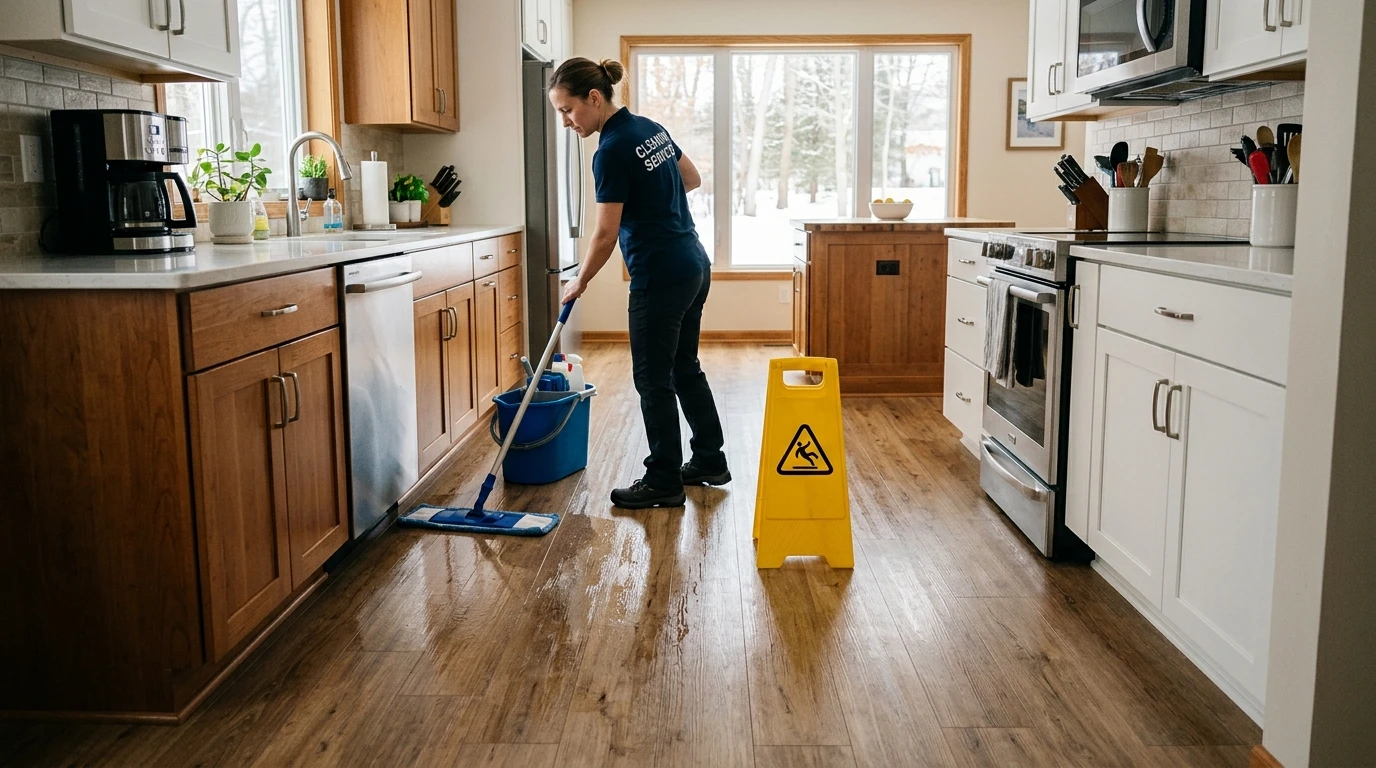
Pricing for house cleaning for seniors is the same as for any household. It depends on the home, not the homeowner’s age. The table below shows Badger Luxe Cleaning’s published Green Bay price ranges:
| Service | Typical Green Bay Price | When It Fits |
|---|---|---|
| Recurring maintenance clean | $120–$280 per visit | Weekly, every-other-week or monthly upkeep |
| Initial deep clean | $200–$500+ per visit | First visit, or a once-a-year reset |
Where your price lands within those ranges depends on the size of the home, the number of bathrooms, its current condition, how often you book and any extras like changing bed linens. Recurring service almost always costs less per visit than booking one-time cleans, because the house never falls far behind. Our full guide to house cleaning costs in Green Bay explains what moves the price, and the house cleaning cost calculator gives you an estimate for your own home. These ranges are a guide, not a quote.
Paying for It: Medicare, Medicare Advantage and Wisconsin ADRCs
Original Medicare won’t cover routine cleaning. As covered above, Medicare’s home health rules exclude homemaker services like cleaning that aren’t related to a care plan.
Medicare Advantage is less clear-cut. According to Medicare.gov’s overview of coverage options, most Medicare Advantage plans offer extra benefits Original Medicare doesn’t cover, such as vision, hearing and dental, and those extras vary from plan to plan. If you or a parent has a Medicare Advantage plan, check its benefits or call the plan directly rather than assuming. Your State Health Insurance Assistance Program (SHIP) offers free counseling on Medicare questions.
For help beyond Medicare, Wisconsin has a dedicated starting point. The state’s Aging and Disability Resource Centers (ADRCs) give Wisconsin residents unbiased information on aging and long-term care options at home, regardless of income. Call 844-WIS-ADRC (844-947-2372) to reach your local ADRC. If your parent lives outside Wisconsin, the national Eldercare Locator (800-677-1116) connects you with their local Area Agency on Aging.
Downsizing? Plan the Cleaning Around the Move
Many empty nesters eventually trade the family house for a condo, a ranch home without stairs or an apartment closer to the grandkids. The cleaning side of that move goes smoother in a set order. Here’s the sequence we see work best:
- Sort and declutter first. Decide what to keep, what goes to the kids and what gets donated. Heavy hauling and clearing out decades of storage is a job for a professional organizer or junk-removal service, not a cleaning crew, so book that before any cleaning.
- Move-out clean of the family home. Once it’s empty, a move-out cleaning gets the house ready for listing photos, showings or handover to the buyer: inside cabinets, appliances, baseboards and every floor.
- Move-in clean of the new place. Schedule a move-in cleaning before the furniture arrives, when every cabinet and corner is easy to reach.
- Restart a recurring plan sized to the new home. A smaller place with one bathroom may need a visit only every other week or once a month.
If you plan to stay in the house for a while before selling, keep your regular plan going and book a deep clean shortly before you list.
Arranging Cleaning Help for an Aging Parent
Adult children often notice first that a parent’s house is getting harder to keep up: a bathtub that hasn’t been scrubbed, dusty shelves in a once spotless home. Bringing in cleaning help for elderly parents works best when they stay in charge of the decision. A few approaches families find helpful:
- Make it their decision. Involve your parent in choosing which rooms get cleaned, which day works and what matters most to them. It’s their home and their routine.
- Consider offering it as a gift. Many families find that “we got you a cleaning service for your birthday” goes over better than “you need help.”
- Agree on who the company contacts. Decide whether scheduling calls and emails go to your parent, to you or to both, and tell the company up front.
- Use the visits as a light check-in. Your parent can ask the team to leave cords, rugs and clutter out of walking paths, and to mention anything they notice out of place.
- Prepare for the first visit together. A little prep makes the first clean go smoothly. Here’s what to do before your house cleaner arrives.
If your parent needs help with personal care and not just the house, revisit the comparison table above. A home-care agency may be the right fit, possibly alongside a cleaning service.
Small Habits That Keep the House Safe Between Visits
A cleaning team handles the heavy work, and a few everyday habits from NIA’s fall-prevention guidance cover the time in between:
- Wipe up spills right away instead of leaving them for the next visit.
- Keep walkways and stairs clear of shoes, papers, books and clothes.
- Keep electrical cords near walls and out of walking paths.
- Skip throw rugs and small area rugs.
- Use a reach stick, not a chair, to get things from high shelves.
- Leave a bathroom light on at night or use a night light that turns on automatically.
- In winter, treat outdoor walkways with ice melt or sand. Clearing snow and ice outside is a job for a snow-removal service, not your cleaner.
A Cleaning Plan That Fits Retirement — Customized, Vetted, No Contract
Badger Luxe Cleaning is a local Wisconsin company, and our local cleaning professionals are background-checked and highly trained. Every home gets a customized cleaning checklist, so each visit follows the plan you set: the rooms you use, the extras you want and the spare rooms on rotation. We use non-toxic, eco-friendly green cleaning products, a real difference for anyone sensitive to strong fumes. There’s no long-term contract: book a one-time clean or go month-to-month, change the frequency when your travel plans change, and cancel anytime without penalty. We know Wisconsin homes, from salt and slush on entry floors to older family homes with more rooms than people, and our pricing is published so you know the range before you call.
FAQ
Does Medicare cover house cleaning for seniors?
No. Original Medicare doesn’t pay for homemaker services like cleaning that aren’t related to a home health care plan, and home health aides help only alongside skilled care for people who are homebound. Some Medicare Advantage plans offer extra benefits, so check your own plan’s benefits directly.
How much does house cleaning for seniors cost in Green Bay?
Badger Luxe Cleaning’s published Green Bay range is $120–$280 per visit for scheduled maintenance cleaning and $200–$500+ for an initial deep clean. The exact price depends on the size and condition of the home, how often you book and any extras. Recurring visits usually cost less per visit than one-time cleans.
Will the same cleaner come every time?
Not necessarily. Badger Luxe Cleaning works in teams, and every visit follows the same written checklist and notes for your home. You can request a specific cleaner and we’ll do our best to accommodate it, but it isn’t guaranteed.
Can we pause or change the plan if we travel or spend part of the winter away?
Yes. There’s no long-term contract, so you can change the frequency, pause while you’re away or cancel anytime without penalty. If you travel, consider booking a reset clean for the week you come home.
Are there free cleaning services for seniors in Wisconsin?
Badger Luxe Cleaning is a paid service. To find out what free or subsidized help may be available in your county, start with your local Aging and Disability Resource Center at 844-947-2372. They can walk you through the options for support at home.
If you’d like to talk through a cleaning plan for your home or a parent’s, which rooms to focus on, how often and what it would cost, call us at (920) 777-9609 or email nathan@badgerluxecleaning.com. We’ll help you set up a schedule that fits your retirement, not the other way around.