
For homeowners and commercial property managers in Wisconsin dealing with white, crusty ice-melt marks on their wood entryways, the fastest and safest solution is a low-moisture acid-neutralizing rinse. You should bypass standard floor soaps, which merely smear the alkaline mineral residue, and instead mist the area with a highly diluted solution of 1/3 cup distilled white vinegar to 1 gallon of warm water. Let it sit for exactly 60 seconds to break down the chemical bond of the salt, blot it gently with a dry microfiber cloth, and hand-dry the floor immediately with a clean towel. This method safely dissolves stubborn calcium chloride and sodium chloride without eating away at your floor’s protective polyurethane finish. Allowing salt to sit or flooding the floor with water will ruin the wood’s seal, leading to expensive cupping or warping. If you are dealing with deep, set-in salt damage or simply do not have the time to scrub your entryways, hiring a professional team to execute a deep clean is your best path forward to protect your investment in Green Bay, WI.
How to Remove Salt Stains From Hardwood Floors
To get rid of white salt stains on wood floors, mist a mild solution of 1/3 cup white vinegar to 1 gallon of warm water over the affected area, let it sit for one minute to neutralize the salt, blot it clean with a damp microfiber mop, and dry the wood immediately with a clean towel. Regular floor cleaners are chemically incapable of dissolving alkaline ice-melt minerals; they merely spread the white haze across the surface. Excess moisture is also a major threat during a Wisconsin winter, as wood planks absorb water easily, leading to wood rot, gapping, and cupping.
Using distilled white vinegar relies on a simple chemistry principle: the mild acetic acid breaks down the highly alkaline calcium chloride and sodium chloride left behind by road salt. However, the dose makes the poison. Too much vinegar will corrode your wood floor’s protective polyurethane coating, leaving it dull and susceptible to water damage. When salt deposits have bypassed the top protective coat and penetrated the deep wood grain, simple wiping will not suffice.
For deeply embedded staining, it is best to leave the work to professionals. If you manage a busy business premises or a home in Green Bay, Appleton, or the surrounding communities and do not have the time to tackle winter floor maintenance, the team of vetted professionals at Badger Luxe Cleaning can help. You can easily reach out to Nathan, Nate, and our dedicated team at (920) 777-9609 to schedule a customized one-time deep clean or a recurring maintenance program tailored to your needs.
Why Standard Floor Cleaners Can’t Get Rid of Salt Stains on Floors
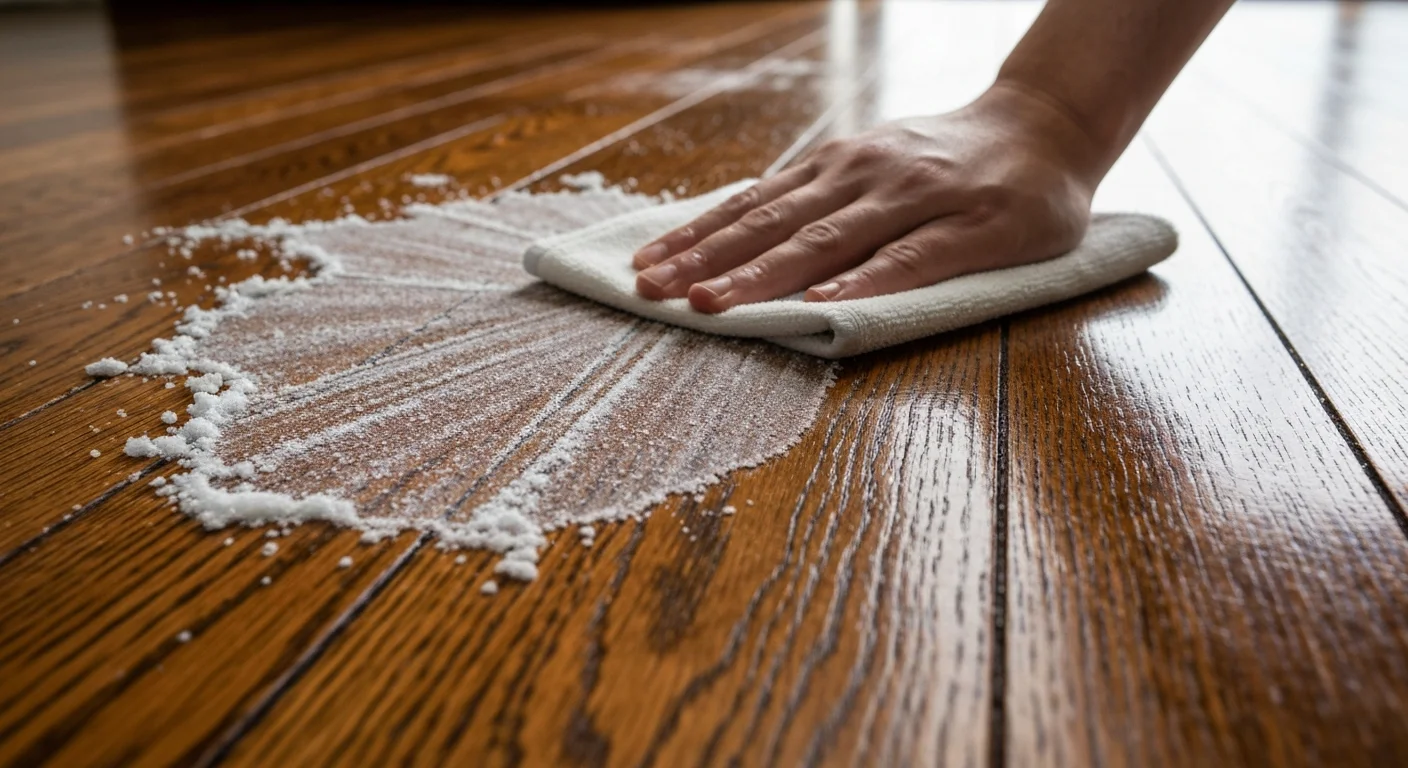
Understanding why standard cleaning products fail on winter salt requires looking at the chemical makeup of ice melt. Most commercial and residential de-icers used on Wisconsin sidewalks and roads contain sodium chloride, calcium chloride, or magnesium chloride. According to chemical safety data published by the U.S. Environmental Protection Agency, these compounds are highly alkaline when dissolved in water. Most everyday wood floor soaps are formulated to tackle grease, skin oils, and organic dirt, which are acidic in nature. Consequently, normal soaps cannot neutralize or break down alkaline salt minerals. Instead, they bond with the salt, creating a sticky, cloudy paste that smears across your wood planks.
The physical cost of leaving this residue on your floors is significant. When salt crystals dry, they revert to a hard, crystalline state. As family members, employees, or clients walk across your entryway, these tiny crystals act exactly like high-grit sandpaper. Under foot traffic, they grind away the protective polyurethane layer of your floor. Once this protective seal is breached, the raw wood underneath is exposed to the elements. Moisture from melting snow can then seep directly into the wood fibers, causing the planks to warp, cup, or even rot.
The financial consequences of ignoring salt tracking are steep. Refinishing a damaged wood floor in Wisconsin typically costs between $3 and $8 per square foot, depending on the wood species and the severity of the damage. For a modest 500-square-foot commercial lobby or home entryway, repairs can easily cost between $1,500 and $4,000. According to historical cost data tracked by the National Wood Flooring Association, neglecting routine wood maintenance during high-moisture seasons is the leading cause of premature floor replacements. Taking five minutes to properly neutralize and wipe away salt buildup saves thousands of dollars in restoration costs.
Step-by-Step: How to Get Salt Stains Out of Hardwood Floors Safely
Removing winter minerals from delicate hardwood floors requires a precise, low-moisture approach to avoid damaging the wood’s protective seal. As professional cleaners, we frequently see well-meaning property owners make the mistake of using steam mops on salt-encrusted floors. This is a critical error: the high heat and moisture of a steam mop open the pores of the wood, driving the dissolved alkaline salt deep into the grain. Once salt gets trapped beneath the finish, it oxidizes with the wood’s natural tannins, leaving permanent, ugly gray or black water stains that can only be removed by sanding the floor down to raw wood.
To avoid this, follow this professional step-by-step low-moisture neutralization process:
- Vacuum Up Dry Salt Crystals: Always start by removing loose debris. Use a hard-floor vacuum setting with the brush roll turned completely off. A rotating beater bar will grab the coarse salt crystals and drag them across your floor, carving deep micro-scratches into your polyurethane finish.
- Prepare the Neutralizing Spray: Mix 1/3 cup of distilled white vinegar with 1 gallon of warm water in a clean bucket or a spray bottle. This precise ratio provides just enough acetic acid to break the chemical bond of the alkaline calcium chloride without harming the clear protective coat of your floor.
- Mist, Do Not Pour: Never pour soapy water or vinegar solutions directly onto wood floors. Instead, use a spray bottle to apply a fine, light mist directly over the white salt stains. You want to damp-treat the area, not flood it.
- Let It Neutralize: Allow the vinegar solution to sit on the floor for 60 to 90 seconds. During this window, the mild acid actively breaks down the mineral bonds, dissolving the crusty white rings. Watch the stains closely; do not allow the solution to sit long enough to dry.
- Blot and Lift: Gently wipe the area using a clean, dry microfiber mop or cloth. Use flat, sweeping motions to lift the dissolved salt off the floor. Do not scrub aggressively, as any remaining undissolved crystals can still scratch the floor.
- Hand-Dry Completely: Run a clean, dry cotton towel over the floor to ensure no moisture remains in the seams between the planks. Letting the floor air-dry will allow residual minerals to settle back down, leaving a faint white film. Hand-drying guarantees a clean, streak-free shine.
How to Get Salt Stains Off Tile Floors vs. Wood Floors
While wood floors require a highly delicate, low-moisture protocol, tile and grout floors demand a completely different approach. Hardwood is easily ruined by excess moisture, scraping tools, and acidic solutions. Ceramic and porcelain tile, on the other hand, are highly durable and can withstand more rigorous cleaning. However, tile floors are not completely immune to winter damage. The cementitious grout lines between tiles are porous and highly vulnerable to the corrosive effects of salt. Over time, calcium chloride can eat away at the grout, causing it to crumble, discolor, and fail.
To clean tile floors, you can use a stronger cleaning solution to tackle heavy buildup. Mix 1 cup of distilled white vinegar and 1 tablespoon of eco-friendly dish soap with 1 gallon of warm water. The soap helps lift the dirt, while the higher concentration of vinegar neutralizes the heavy salt crust in the grout.
Unlike wood, you can use a soft-bristled scrub brush to agitate the grout lines and texturized tile surfaces where salt deposits hide. Once you have scrubbed the area, rinse it with clean water to remove any soap film that might attract dirt later. Finally, use a squeegee or dry towel to remove the excess water, ensuring your grout lines remain clean and structurally sound.
Comparison Table: Wood vs. Tile Salt Removal
| Cleaning Metric | Hardwood Floors | Ceramic & Porcelain Tile |
|---|---|---|
| Vinegar-to-Water Ratio | 1/3 cup vinegar per 1 gallon water | 1 cup vinegar (+ optional dish soap) per 1 gallon water |
| Application Tool | Fine-mist spray bottle | Microfiber mop or bucket |
| Agitation Tool | Soft microfiber cloth (blotting only) | Soft-bristled scrub brush (grout lines only) |
| Drying Method | Immediate manual towel dry | Squeegee or towel dry |
| Major Risk of Neglect | Wood warping, split seams, ruined polyurethane | Corroded grout lines, dull tile glaze |
Part of Your Winter Cleaning Checklist: Preventing Salt Damage
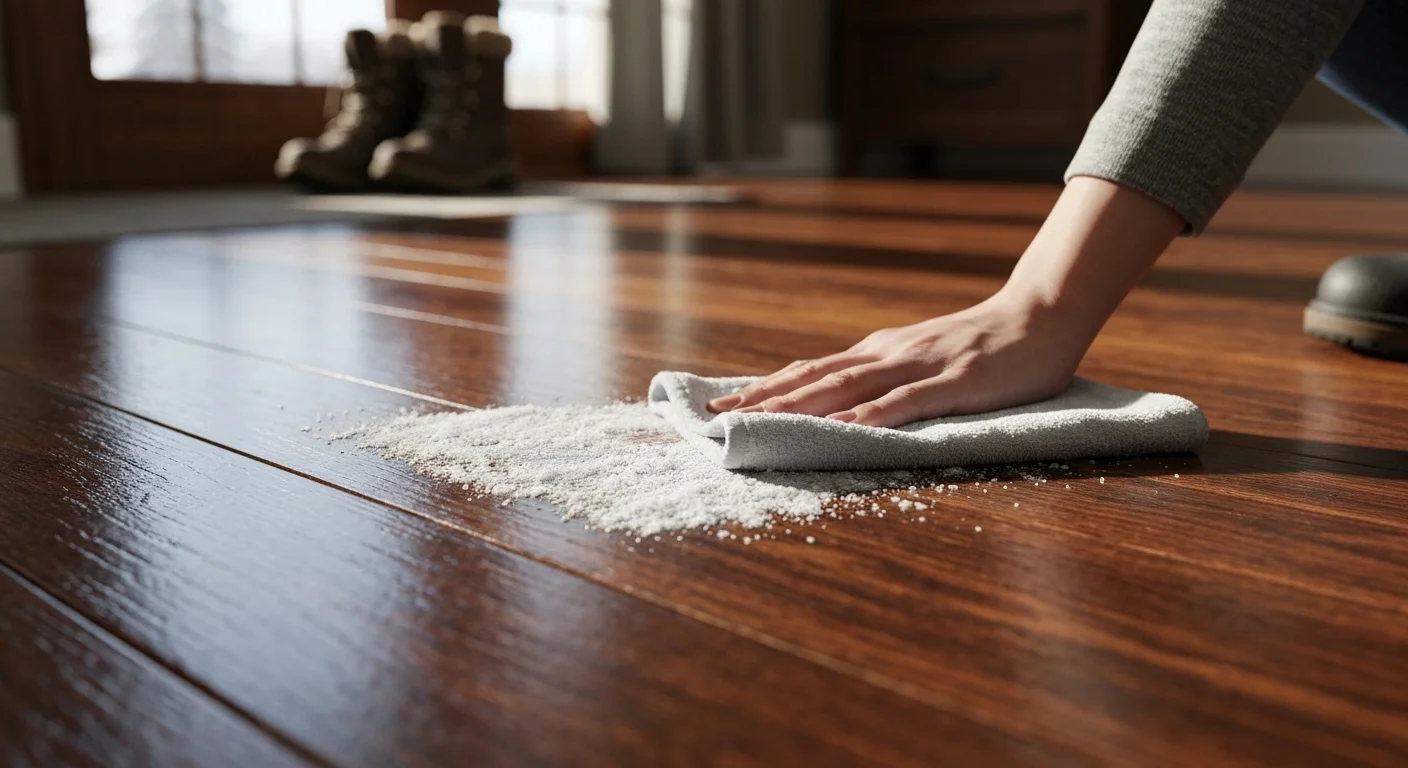
Integrating floor care into your broader building maintenance routine is the most effective way to prevent salt damage before it starts. The harsh winter climate in Green Bay, WI, demands a proactive approach. The best defense is to establish a robust, three-zone entry barrier system that stops snow, ice melt, and slush at your doorstep.
To keep your floors safe all season, set up these three specific zones:
- Zone 1 (Outdoor Entryway): Place heavy-duty rubber scraper mats on your porch or outside your storefront entrance. These mats are designed to grab large chunks of snow, ice, and salt before anyone steps inside.
- Zone 2 (Transition Zone/Garage): If you are cleaning your garage floor in winter, make sure to keep a squeegee and a bucket of warm, neutralized water nearby. Clearing salt slush from your garage and bay areas prevents vehicles and shoes from tracking heavy brine deeper into your building.
- Zone 3 (Indoor Entryway): Position large, highly absorbent microfiber walk-off mats immediately inside the door. Ensure these mats feature a high-quality, non-slip rubber backing. Avoid cheap vinyl backings, which can trap moisture underneath and discolor your polyurethane-finished wood floors.
According to research by the Worldwide Cleaning Industry Association (ISSA), more than 80% of all dirt and contaminants in a building are tracked in on the shoes of occupants. Managing these entry points dramatically reduces floor wear. Add salt neutralization to your routine winter home cleaning checklist during active snowstorms. For commercial properties, office lobbies, dental practices, and retail spaces, we recommend implementing a daily evening floor sweep and wet-mopping program using a commercial pH-neutralizer to maintain safety and compliance.
FAQ — People Also Ask
What is the white residue left by winter salt on floors?
The white residue is a concentrated deposit of sodium chloride, calcium chloride, or magnesium chloride. As the snow and slush tracked indoors evaporates under your heating system, it leaves behind these dry, highly alkaline mineral crusts. If left untreated, these minerals will scratch your wood floors and erode your grout lines.
How do you get salt stains off floors without vinegar?
You can use a commercial, pH-neutral floor cleaner specifically formulated as a winter rinse-off or salt neutralizer. These products are chemically engineered to bind to calcium and sodium ions, lifting them safely from the floor without using acids that can dull the polyurethane finish. Always follow the manufacturer’s dilution ratios to prevent soapy buildup.
Which is better for cleaning salt stains: a traditional mop or a microfiber cloth?
A microfiber cloth or microfiber flat mop is far superior to a traditional cotton string mop. Traditional mops hold too much water, which can seep into wood floorboards, causing swelling, buckle damage, and mold. Microfiber is electrostatic, allowing it to attract and trap fine salt particles instead of dragging them across the wood.
When should you hire a professional for salt stain removal?
You should hire a professional if the white salt stains have turned into dark grey or black discolorations in the wood grain. This indicates the polyurethane finish has failed and the salt water has oxidized with the tannins in the wood, requiring floor sanding and refinishing. It is also wise to hire a professional service for commercial lobbies, medical practices, or retail stores where daily, labor-intensive floor maintenance is required.
Is it true that vinegar damages hardwood floors?
Yes, concentrated vinegar will damage your wood floors over time. Pure vinegar has a highly acidic pH of around 2 to 3, which chemically breaks down the protective polyurethane finish, leaving your floors dull and exposed to moisture. However, when diluted to 1/3 cup per gallon of water and dried immediately, it is completely safe and highly effective at neutralizing alkaline salt deposits.
Protect Your Wisconsin Floors with Badger Luxe Cleaning
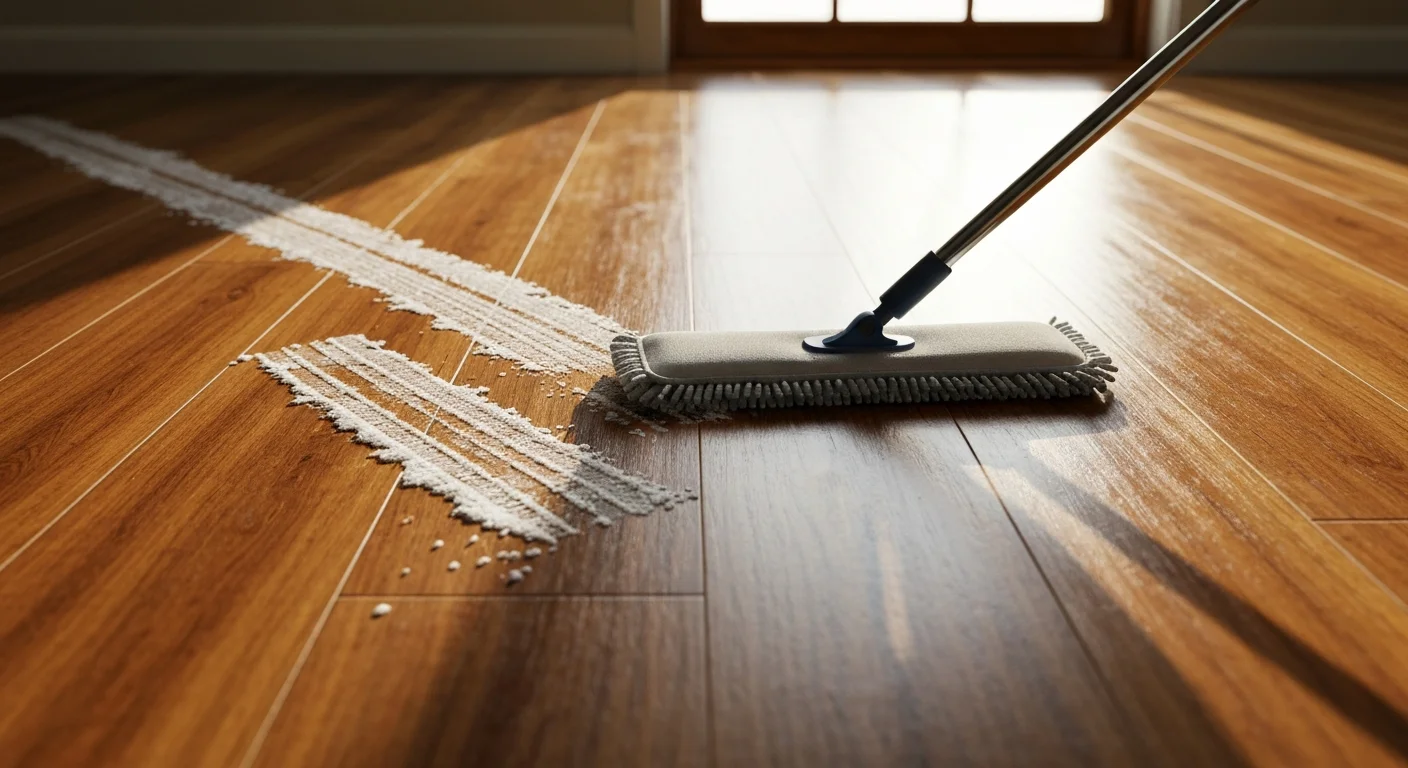
Managing the relentless tracking of winter salt is a constant battle for property owners in Green Bay, WI. According to environmental reports from the Wisconsin Department of Natural Resources, hundreds of thousands of tons of road salt are applied to Wisconsin roads and sidewalks every winter, making salt tracking an inevitable challenge for local homes and businesses. If you are struggling to keep up with the constant cycle of snow, slush, and white, crusty floors, you do not have to tackle it alone. At Badger Luxe Cleaning, co-founded by Nathan Jonet and Nate Vincent, we specialize in high-quality residential and commercial cleaning services designed to protect your property investment through the toughest Wisconsin winters.
We’re a trusted network of fully vetted, background-checked independent cleaning contractors serving Green Bay and the surrounding area.
We’re a trusted network of fully vetted, background-checked independent cleaning contractors serving Green Bay and the surrounding area. We focus on reliable, high-effort cleaning using eco-friendly, non-toxic products, meaning we never use harsh chemicals that could compromise your family’s health or ruin your flooring. With no forced long-term contracts and highly customized plans, we work around your schedule to keep your home in shape all winter long.
We are also proud sponsors of Cleaning for a Reason, offering free cleaning services to local cancer patients. To help you keep your floors pristine this winter, we are currently offering $50 off your first cleaning service. Contact us today at (920) 777-9609 or visit badgerluxecleaning.com/booking/ to request your free, customized quote.