
Stainless steel appliances streak because something gets left on the surface. It might be cleaner residue, oil from hands or cooking, or minerals from tap water, and once it’s dragged across the grain and left to dry, it shows. Learning how to clean stainless steel appliances without streaks is simpler than most hacks suggest. Put a drop of mild dish soap in warm water, wipe with the grain, rinse with plain water, then buff dry right away with a clean microfiber cloth. Most guides skip one step: check which finish you have first. Coated “fingerprint-resistant” and black stainless need gentler care, and appliance makers don’t agree on products like vinegar. Below we explain why streaks on a stainless steel fridge keep coming back, how to diagnose them, how to clean them step by step, and how to tell residue from permanent damage.
Key Takeaways
- Most streaks are a film, not damage. Cleaner residue, oils and minerals get smeared across the grain and left to dry.
- The streak-free method: mild dish soap and warm water, wipe with the grain, rinse with plain water, and buff dry immediately with microfiber.
- Check your finish and manual first. Whirlpool bans vinegar-based cleaners on its traditional stainless, while Samsung suggests vinegar for its stainless microwaves. A GE manual says not to use stainless steel cleaners on fingerprint-resistant or black stainless doors.
- Green Bay’s city water measures about 130 mg/L (≈7.5 grains per gallon), which the USGS scale counts as “hard.” Never let rinse water air-dry.
- If a mark survives two careful cleanings, it’s probably etching, scratches or a worn coating. Cleaning can’t fix that.
Why Do Stainless Steel Appliances Streak?
If your stainless steel refrigerator has streaks right after you cleaned it, the cleaning itself is usually the cause. Stainless steel doesn’t streak on its own. What streaks is the thin layer of whatever was left on it, and the brushed texture makes that layer easy to see.
What Makes Stainless Steel “Stainless” (and Why It Shows Every Mark)
Stainless steel resists rust because of chromium. An explainer from the University of Cambridge’s Phase Transformations group describes a passive, chromium-rich oxide film only about 1–5 nanometers thick that protects the metal. When the surface is scratched, the chromium reacts with oxygen and the film re-forms. The same explainer notes that chloride ions can cause localized breakdown of that film, which is one reason chlorine bleach doesn’t belong on your appliances. The brushed look on most appliance doors comes from fine parallel lines called the grain. In our cleaners’ experience, residue settles into those lines, and any film wiped across them catches the light as a streak.
The 6 Most Common Causes of Streaks
- Cleaner residue. Sprays and polishes that aren’t fully rinsed or buffed off dry into a cloudy film.
- Oil from fingers and cooking. Skin oil around handles and airborne cooking grease mix with leftover cleaner and smear into rainbow-like swirls.
- Hard-water minerals. When tap water evaporates on the surface, its calcium and magnesium stay behind as white spots and drip lines.
- Wiping across the grain. Strokes that cut across the brushed lines push residue into them at an angle, where it shows.
- Too much product or a soaking-wet cloth. More liquid means more to dry, and more gets left behind when it doesn’t.
- The wrong cloth. Linty towels, cloths loaded with detergent and paper towels leave fibers and film. Some appliance makers tell you not to use paper towels at all.
These layers build on each other. Cleaning more often with the wrong method adds film instead of removing it, which is why many people find their appliances look worse the harder they try.
Hard Water in Green Bay: What the Numbers Say
Mineral spots are a real factor here. Green Bay Water reports a hardness of 130 mg/L, about 7.5 grains per gallon. The source is Lake Michigan, and the utility tests weekly; readings stay consistently close to that level. The table below shows where that falls on the U.S. Geological Survey’s water hardness scale.
| USGS hardness class | mg/L (as CaCO3) | Grains per gallon (approx.) | Where Green Bay Water falls |
|---|---|---|---|
| Soft | 0–60 mg/L | 0–3.5 gpg | — |
| Moderately hard | 61–120 mg/L | 3.6–7.0 gpg | — |
| Hard | 121–180 mg/L | 7.1–10.5 gpg | 130 mg/L ≈ 7.5 gpg |
| Very hard | Over 180 mg/L | Over 10.5 gpg | — |
The utility describes its own water as “somewhere in the middle.” It treats 200 mg/L as hard and under 70 mg/L as soft. On the USGS scale, though, 130 mg/L lands in the “hard” band. Either way, the water carries enough calcium and magnesium to leave visible spots when droplets dry on a reflective appliance door. Green Bay Water also notes that groundwater is generally very hard, so homes on private wells should expect more mineral spotting, not less. The USGS calls hard-water residue “not dangerous, but unsightly,” which describes it well on a fridge door. The practical rule is to never let water air-dry on stainless steel.
Diagnose Your Streaks Before You Clean
Different streaks have different causes, so the fix depends on which kind you’re looking at. Check this table before you reach for a product. It’s based on our cleaners’ experience and the manufacturer guidance cited in this article.
| What you see | Likely cause | First fix | If that doesn’t work |
|---|---|---|---|
| Oily, rainbow-like smears around handles | Skin oil, cooking grease or oil polish mixed with cleaner | Dish soap and warm water, rinse, dry | Reset clean (see below) |
| White chalky dots or drip lines | Hard-water minerals from splashes or dispenser drips | Soap wash, plain-water rinse, immediate dry | Hard-water stain steps (see below) |
| Cloudy haze over the whole door after cleaning | Too much product, or a detergent-loaded cloth | Plain warm-water pass with a fresh cloth, then buff dry | Full reset clean |
| Streaks running across the grain | Wiping in circles or against the brushed lines | Re-wipe and dry with the grain | Lines in the metal itself may be scratches (see permanent streaks) |
| Dull patch that returns after every clean (a “chemical mark”) | Old product build-up, or etching from a harsh cleaner | Two reset cleans | Treat it as damage (see permanent streaks) |
| Brownish or discolored spots where water dried | Water left to dry on the surface | Soap, rinse, dry thoroughly | Contact the manufacturer’s service |
The last row isn’t just about looks. Whirlpool’s care guidance warns that water left on the surface can cause discoloration, because water may contain iron.
Know Your Finish: Traditional, Fingerprint-Resistant or Black Stainless
Not every “stainless” appliance front is bare metal. Many newer models have a clear protective coating sold as fingerprint-resistant or smudge-proof, and black stainless is coated too. This matters, because a product that’s fine on one finish can damage another. Whirlpool’s guide to cleaning traditional stainless steel and its page for fingerprint-resistant stainless give different “do not use” lists. The care section of a GE refrigerator owner’s manual is blunt about fingerprint-resistant, black stainless, slate and painted finishes: “DO NOT use Stainless Steel cleaners on the door surfaces.” If you’re not sure which finish you have, look up your model number in the manual or the original product listing. Spot-test anything new on a hidden area first.
| Finish | How to recognize it | Safe everyday clean | Avoid |
|---|---|---|---|
| Traditional (uncoated, brushed) | Bare brushed metal; no “fingerprint-resistant” label in the manual or listing | Warm soapy water, nonabrasive sponge or microfiber, with the grain, dried fully; polish made for stainless is allowed | Paper towels, abrasives, steel wool, ammonia, citrus- or vinegar-based cleaners, oven cleaner (Whirlpool) |
| Fingerprint-resistant / smudge-proof (clear-coated) | Sold as “fingerprint resistant” or similar; named in the manual | Warm water and mild soap or detergent, microfiber, then dry | Stainless steel cleaners (GE manual); abrasive or harsh cleaners, chlorine bleach, steel wool, paper towels (Whirlpool) |
| Black stainless (coated) | Dark, smoky finish, easy to spot | Same mild-soap method as fingerprint-resistant | Same list; Whirlpool’s black stainless guide says they may scratch or dull the clear coat |
Whirlpool also states that using the products on its banned list “could damage your appliance’s finish and is not covered by the manufacturer’s warranty.” That’s one more reason to read your own manual before trying a cleaning hack.
How to Clean Stainless Steel Appliances Without Streaks (Step by Step)
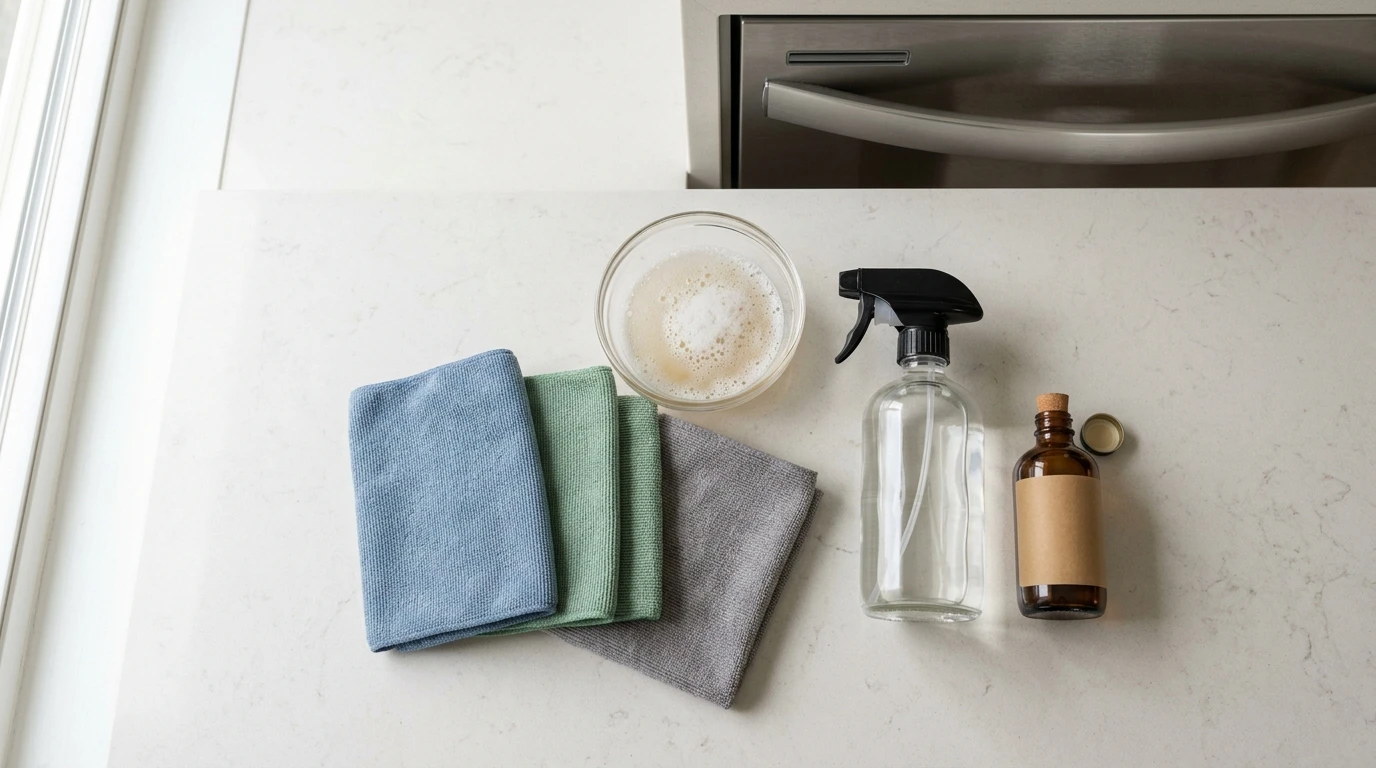
The best everyday method works on all three finishes because it uses only what every manufacturer cited here allows: warm water, a little mild soap and soft cloths. This is the method our cleaners use to clean stainless steel appliances in Green Bay homes.
What You’ll Need
- Two or three clean microfiber cloths (one for washing, one for rinsing, one for drying)
- Warm water
- Mild dish soap (a drop or two per bowl or spray bottle)
- A spray bottle (optional)
- For traditional stainless only, and optional: a polish made specifically for stainless steel
Leave the paper towels in the drawer. Whirlpool lists them among the things not to use on its stainless.
The Streak-Free Method
- Find the grain. Look at the door under good light. The fine brushed lines usually run vertically or horizontally, and every wipe should follow them.
- Remove loose debris. Dust off crumbs and drips first so you don’t drag grit across the surface.
- Dampen the cloth, not the appliance. Wet a microfiber cloth with soapy water and wring it until it’s damp, not dripping.
- Wipe with the grain, top to bottom. Work in small sections, overlapping your strokes slightly.
- Rinse. Go over the same section with a second cloth dampened with plain water to lift the soap film.
- Buff dry immediately. Use a dry microfiber cloth, still moving with the grain. Don’t let any water air-dry.
- Polish (optional, traditional stainless only). Buff in a small amount of polish made for stainless steel, with the grain. Whirlpool says to keep it off plastic parts, trim pieces and rubber door gaskets. Skip this step on fingerprint-resistant and black stainless.
The Best Way to Clean Stainless Steel Appliances Without Streaking: Methods Compared
Search this topic and you’ll find a dozen hacks. Here’s how the popular methods compare, and what appliance makers themselves say about each. Samsung’s support guidance for its stainless steel microwaves is the most permissive manufacturer source we found. Whirlpool’s is the strictest.
| Method | Good for | Streak risk | What manufacturers say |
|---|---|---|---|
| Mild dish soap + warm water | Everyday cleaning, grease, fingerprints; all finishes | Low if rinsed and dried | Recommended by Whirlpool (all three finishes) and the GE manual |
| White vinegar | Fingerprints, mineral spots | Medium | Samsung suggests a little on a damp cloth; Whirlpool bans vinegar-based cleaners on traditional stainless |
| Glass cleaner / ammonia | Not recommended | High | Samsung: can leave streaks; Whirlpool bans ammonia |
| Stainless steel cleaner or polish | Shine on traditional stainless | Medium if overapplied | Whirlpool: only polishes made for stainless; GE manual: not on fingerprint-resistant or black stainless doors |
| Olive, mineral or baby oil | Hiding fingerprints on traditional stainless | High if overdone; the film collects dust | Samsung mentions a few drops of olive oil; coated-finish guides list only mild soap and water |
| Club soda | Light touch-ups | Low to medium; acts much like plain water | No manufacturer guidance found |
| Rubbing alcohol | Not recommended on appliance fronts | Low, but risky for coatings | Samsung lists alcohol among chemicals that can erode the protective coating |
| Baking soda paste | Not recommended | Gritty; can scratch | Whirlpool bans abrasive powders on traditional stainless and abrasive cleaners on coated finishes |
The rule of thumb: your manual beats any internet hack. If your brand allows vinegar and you use it, keep it on the cloth, wipe with the grain, rinse and dry. Keep it off rubber door gaskets too; we explain why in our guide to cleaning vinegar vs. white vinegar. If your manual bans it, mild soap does the same job without the risk. Samsung’s guidance adds a few habits that prevent streaks with any product: apply cleaner to the cloth rather than the appliance, never mix cleaning products, wipe in the direction of the polish lines, and always rinse off leftover cleaner and dry thoroughly.
How to Get Streaks Off Stainless Steel (Removing Existing Streaks and Build-Up)
To get streaks off stainless steel that’s already streaky, you have to remove the layers, not add another one. Spraying more polish over old polish only thickens the film. To remove streaks from stainless steel properly, do a reset clean:
- Wipe the whole door with plain warm water on a clean microfiber cloth to lift surface dust and loose residue.
- Wash with warm water and a drop of dish soap, with the grain. This cuts old polish and oil.
- Rinse with a fresh cloth and plain water.
- Buff dry immediately with a dry cloth, still with the grain.
- If haze remains, repeat the soap, rinse and dry steps once more.
- Check the door again under good light and compare what’s left with the diagnosis table above.
Most people can get rid of streaks on stainless steel in one or two passes this way. If every appliance in the kitchen has years of polish, oil and cooking grease layered on, that’s the kind of top-to-bottom reset our deep cleaning service is built for.
How to Remove Hard Water Stains from Stainless Steel
Start with the same soap wash, plain-water rinse and immediate dry. Fresh mineral spots usually lift this way. Older, crusted spots may need a second pass. Use vinegar only if your appliance is traditional stainless and your manual allows it, and never on fingerprint-resistant or black stainless, where the manufacturers we cite call for mild detergent only. Prevention matters more than removal with Green Bay water. Pay attention to the drip zone under the ice and water dispenser and to splash areas near the sink, and dry them as part of every wipe-down.
Cutting Tough Grease on Ranges and Hoods
Grease on a range front or hood needs more time, not a harsher product. Apply warm soapy water with a cloth, let it sit for a minute to soften the grease, then wipe with the grain, rinse and dry. Keep oven cleaner off exterior stainless; Whirlpool lists it among the products not to use on the finish. For greasy knobs and handles, a soapy cloth and a little patience work better than scrubbing.
Permanent Streaks on Stainless Steel Appliances: When It’s Damage, Not Dirt
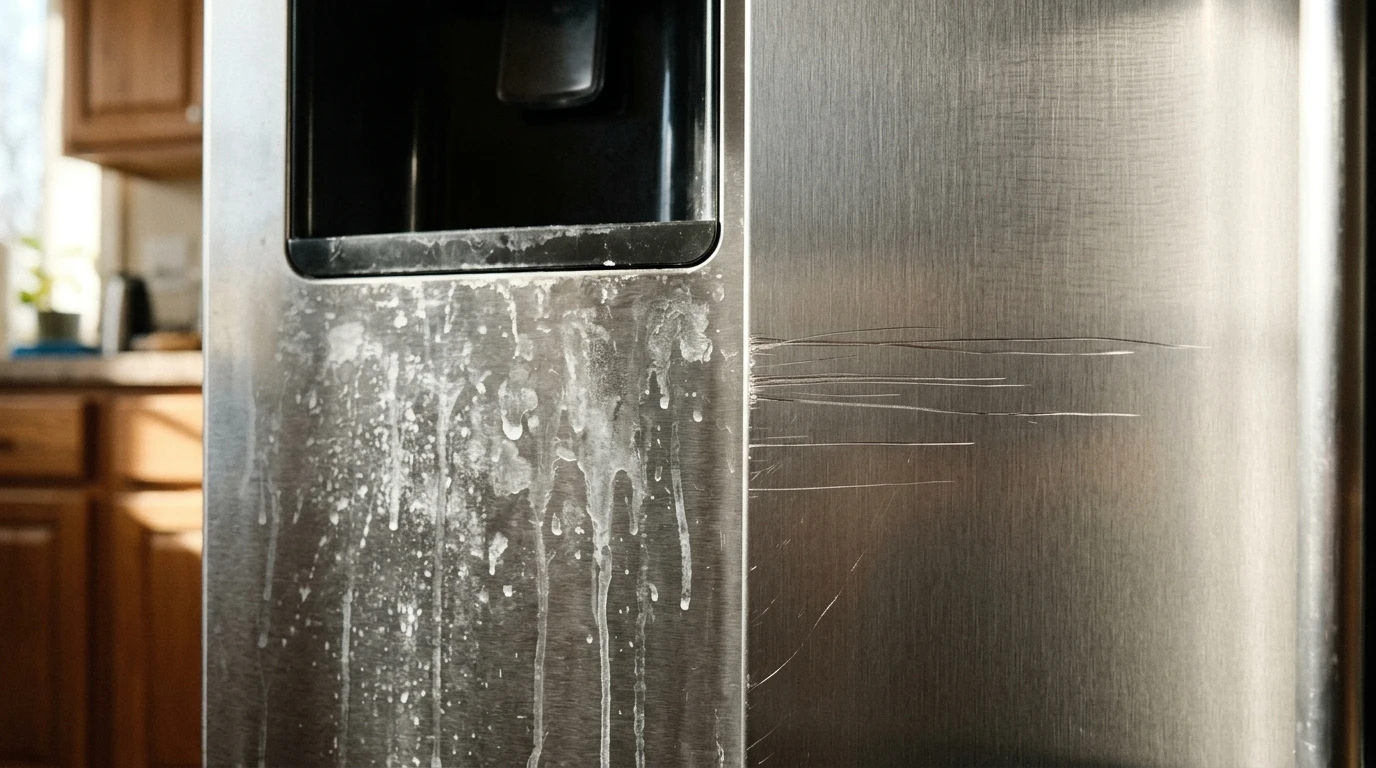
If a mark survives the reset clean twice, it’s probably in the surface rather than on it. From what our cleaners see in homes, permanent streaks on stainless steel appliances usually trace back to one of three things. Chlorine bleach or other harsh chemicals may have attacked the finish; Samsung warns that bleach and chlorine products damage the protective layer, and the Cambridge explainer describes how chlorides break down the passive film. Steel wool, scouring pads or gritty cloths may have cut scratches into the metal. Or, on fingerprint-resistant and black stainless, the clear coat may be scratched or dulled, which Whirlpool warns abrasive and harsh products can do.
| Problem | Can regular cleaning fix it? | What to do |
|---|---|---|
| Product or oil film | Yes | Reset clean: soap, rinse, dry |
| Hard-water mineral spots | Yes, if caught early | Soap, rinse, dry; dry drip zones every time |
| Bleach or chemical mark | Usually no | Stop using the product; contact the manufacturer’s service or an appliance repair technician |
| Scratches across the grain | No | Ask the manufacturer or an appliance technician; don’t sand or scrub |
| Dulled or scratched clear coat | No | Contact the manufacturer’s service; don’t try to polish it out |
We’re upfront about this with clients. Cleaning removes film, not damage. This comes up often at move-out, when landlords look closely at appliance fronts. Our move-out cleaning takes care of residue, grease and mineral spots, but a scratch or bleach mark that was already there will still be there afterward.
Appliance-by-Appliance Tips
How to Clean a Stainless Steel Fridge Without Streaks
Start with the handles, where most of the oil collects, and wash them with the soapy cloth before you touch the doors. That way you don’t spread their grease across clean metal. Then do each door top to bottom with the grain, rinse and dry. Give the water and ice dispenser area extra attention, since its drips are the most common source of hard-water dots on a fridge. If you use stainless polish on a traditional-finish fridge, keep it off the rubber door gaskets, as Whirlpool advises. Renters should add the fridge front to their final walk-through. Our move-out cleaning checklist for Green Bay renters covers what inspectors usually check.
Other Stainless Appliances
The method is the same everywhere. What changes is where the streaks build up:
| Appliance | Where streaks build up | Extra tip |
|---|---|---|
| Dishwasher | Handle, control panel, top edge of the door | Wring the cloth well near the controls and dry right away |
| Range / oven front | Grease splatter, around the knobs | Let soapy water sit briefly on grease; no oven cleaner outside. Wipe the granite countertops next to it with a stone-safe cleaner, not your stainless product |
| Over-the-range microwave and hood | Underside and front, from cooking grease | For the inside, see the easiest way to clean a microwave |
| Small appliances with stainless trim | Around buttons and where hands grip | Unplug first; use a barely damp cloth, never spray |
Mistakes That Leave Streaks (or Damage the Finish)
- Using glass cleaner with ammonia. Whirlpool bans ammonia, and Samsung notes glass cleaner can leave streaks.
- Drying with paper towels or newsprint, both on Whirlpool’s “do not use” list.
- Wiping in circles or across the grain.
- Spraying cleaner straight onto the door instead of onto the cloth.
- Letting rinse water air-dry.
- Using too much product or too much oil.
- Reaching for bleach or chlorine sprays, which can attack the protective film.
- Scrubbing with steel wool, scouring pads or gritty cloths.
- Using stainless steel cleaner on fingerprint-resistant or black stainless doors.
- Getting polish on rubber gaskets, plastic parts or trim.
How to Keep Stainless Steel Appliances Streak-Free Week to Week
A little regular upkeep beats an occasional big scrub. This is the schedule we recommend:
| Task | How often | How |
|---|---|---|
| Handle and fingerprint touch-up | Daily or as needed | Dry or slightly damp microfiber with the grain, then dry |
| Full front wipe | Weekly | Soap, rinse, dry |
| Reset clean of all appliance fronts | Monthly, or when haze builds | Two-pass soap, rinse and dry routine |
| Wash microfiber cloths | After each use | Our practice: wash without fabric softener so cloths don’t leave film |
“Wipe down appliances” is already an item on our house cleaning checklist. With our standard cleaning, that weekly appliance-front wipe happens without you having to think about it.
Tired of Streaky Appliance Doors? How Badger Luxe Cleaning Keeps Green Bay Kitchens Streak-Free
Stainless steel rewards the right method and punishes shortcuts, and that’s the kind of detail our team pays attention to. Our cleaners are local, background-checked and trained, and they use non-toxic, eco-friendly products. That fits stainless steel well, since mild soap and water beat harsh chemicals on these finishes anyway. Every home gets a customized cleaning checklist, so “appliance fronts, soap-rinse-dry, with the grain” can be a standing item. Because we work in Wisconsin homes every week, we know what local hard water does to a fridge door. You can book a one-time clean or recurring cleaning month to month with transparent pricing. There’s no long-term contract, and you can cancel anytime without penalty.
FAQ
Can I use Dawn dish soap on a stainless steel fridge?
Yes. A drop of mild dish soap like Dawn in warm water is exactly the kind of mild soap or detergent Whirlpool and the GE manual recommend. The key is to rinse with plain water afterward and buff dry, because soap left on the surface is itself a cause of streaks.
Can you use glass cleaner on stainless steel?
We’d skip it. Samsung’s guidance says glass cleaner can leave streaks, and Whirlpool bans ammonia, a common glass-cleaner ingredient, on its traditional stainless. Windex with vinegar adds an acid that some manufacturers also ban. Mild soap and water does the job better.
Can you use vinegar on stainless steel?
It depends on your appliance. Samsung suggests a small amount of white vinegar on a damp cloth for its stainless microwaves, while Whirlpool bans vinegar-based cleaners on its traditional stainless. Never use vinegar on fingerprint-resistant or black stainless. Check your own manual first.
How do I get fingerprints off stainless steel?
For a quick touch-up, wipe with a dry or slightly damp microfiber cloth along the grain, then dry. Fingerprints are mostly skin oil, so if they smear, use a soapy cloth, rinse and dry. On traditional stainless, a light polish made for stainless can help prints show less. That’s the main reason to polish stainless steel appliances at all.
How do I clean black stainless steel?
Use only warm water, mild soap and a microfiber cloth, then dry. Black stainless has a clear coat, and Whirlpool warns that abrasive or harsh cleaners, bleach, steel wool and paper towels may scratch or dull it. The GE manual says not to use stainless steel cleaners on black stainless doors.
Can I use a Magic Eraser on a stainless steel refrigerator?
We don’t. Melamine sponges clean by gentle abrasion, and Whirlpool’s care guides tell owners to avoid abrasive pads and cloths. On fingerprint-resistant or black stainless, that risks dulling the clear coat. On traditional stainless, it can leave marks across the grain.
If you’d rather leave the appliance fronts, along with the rest of the house, to someone else, our Green Bay team can help. Call (920) 777-9609 or email nathan@badgerluxecleaning.com to talk through what your home needs.