
Blinds are one of those things you stop seeing until the sun hits them at the wrong angle and suddenly every slat looks grey instead of white. In a Green Bay or Madison home, closed-up winter months make this worse—windows stay shut, air barely moves, and dust settles on every horizontal surface in the house, blinds included. The good news is you almost never need to take them down to fix it.
This guide covers how to clean blinds by material, when taking them down is actually worth it, and a schedule that keeps them from getting this dusty again.
What You’ll Need
- A microfiber cloth or duster — for dry dusting, the first step no matter what material you’re working with.
- A vacuum with a soft brush attachment — faster than a cloth for horizontal slats and corners.
- Mild dish soap — the base for almost every wet-cleaning solution.
- Two soft cloths — one for the soapy solution, one dry for following behind it.
- An old sock or extra microfiber cloth and kitchen tongs — optional, for cleaning both sides of a slat at once.
Should You Take Blinds Down to Clean Them?
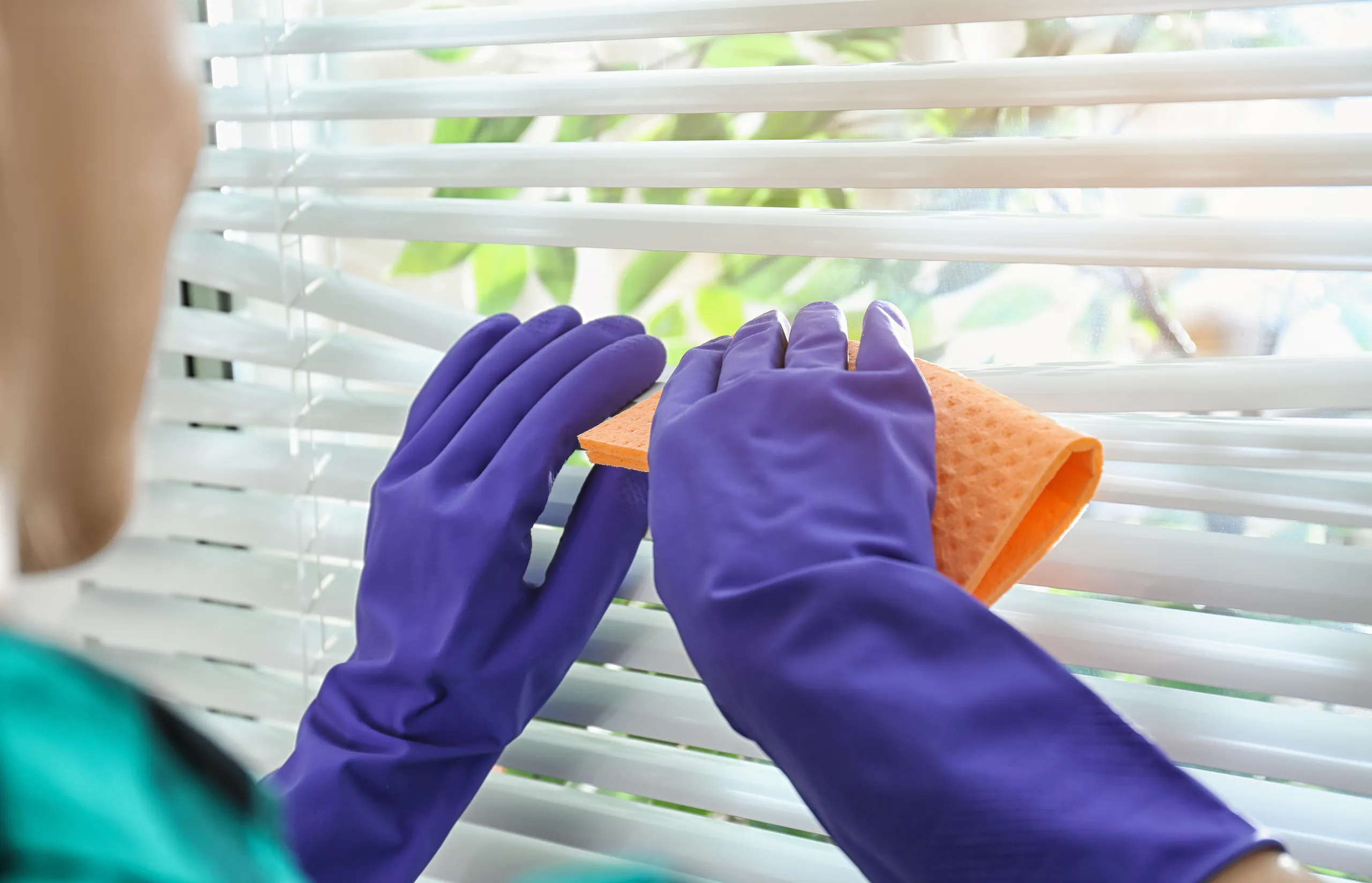
Almost never, and that’s good news—removing blinds is fiddly, and rehanging them level again is more annoying than it sounds. Regular dusting and even a full wipe-down can be done with blinds still mounted, front and back, as long as you can tilt or rotate the slats to reach both sides.
Taking them down only makes sense in a couple of situations: if they need to be fully submerged for a deep soak (some aluminum or vinyl blinds can handle a bathtub soak, but wood and faux wood never should), or if they’ve gone untouched long enough that grime has built up in the mechanism itself, not just on the slats. If you just finished a renovation, that’s often when this happens—fine construction dust works its way into the lift mechanism in a way that regular dusting can’t reach. Our guide on how to clean your house after renovation covers post-construction dust in more depth if that’s what you’re dealing with.
How to Clean Blinds by Material
Venetian and Aluminum Blinds
Close the slats so they lie flat with the wide side facing you, then dust with a microfiber cloth or vacuum brush attachment, working top to bottom. For a deeper clean, wipe with a cloth dampened in warm water and a few drops of dish soap, then flip the slats and repeat on the other side. Aluminum blinds are durable enough to handle a bathtub soak if they’re especially grimy—lay them flat, wash with soapy water, rinse, and let them air dry completely before rehanging.
Wood and Faux Wood Blinds
Real wood blinds should never be soaked or heavily wetted—water causes warping and discoloration that doesn’t reverse. Dust first, then use a barely damp cloth with a small amount of mild soap only where needed, drying immediately behind it. Faux wood tolerates a bit more moisture than real wood, but the same low-moisture approach is still the safer bet for how to clean wooden blinds without shortening their lifespan.
Vinyl Blinds
Vinyl is the most forgiving material here. Dust first, then wipe down with warm soapy water on a cloth, rinse with a clean damp cloth, and let dry. If they’re heavily soiled, vinyl blinds can typically handle a bathtub soak the same way aluminum ones can.
Fabric Blinds
Vacuum first using an upholstery attachment—fabric holds onto dust differently than hard slats, and scrubbing it can push dirt deeper rather than lifting it out. For spots or stains, dab (don’t rub) with a cloth dampened in mild soapy water, and always test an inconspicuous area first, since some fabrics develop visible water spots when they dry unevenly.
Roller Blinds and Shades
Fully extend the blind so the whole surface is exposed, then dust with a dry microfiber cloth in smooth downward strokes. Many roller blinds are made of vinyl or treated synthetic fabric that can handle a damp cloth for spot cleaning, but check the material first—some fabric shades stain or discolor if they get wet at all.
Cleaning Blinds Without Taking Them Down: Step-by-Step
- Close the slats fully so one side faces you directly, then dust dry with a microfiber cloth or vacuum brush attachment, top to bottom.
- Mix a small amount of mild dish soap into warm water, and dampen a cloth—wrung out well, not dripping.
- Wipe each slat, working in one direction, rinsing the cloth every few slats so you’re not just redistributing grime.
- Rotate or reverse the slats and repeat on the other side.
- Wipe down the header, lift cords, and any decorative tapes with the same damp cloth, since these collect just as much dust as the slats themselves.
- Dry with a clean cloth immediately, especially on wood or faux wood, where leftover moisture causes the most damage.
Time-Saving Tricks That Actually Work
The tongs-and-sock method: wrap a microfiber cloth or old sock around each arm of a pair of kitchen tongs, securing it with a rubber band, then clamp the tongs onto a slat and slide across. This cleans both sides of the slat in one pass instead of two, which is where most of the time savings comes from on a full set of blinds.
The lint roller trick: for blinds coated in pet hair or fine dust that puffs into the air the moment you touch it, run a sticky lint roller across the slats instead of a cloth. The adhesive lifts the dust directly rather than scattering it onto the furniture below.
How Often to Clean Blinds
| Room | Dusting | Full Wipe-Down |
|---|---|---|
| Kitchen | Weekly | Monthly (grease builds up faster here) |
| Bathroom | Weekly | Every 1–2 months (humidity accelerates grime) |
| Bedrooms & Living Areas | Weekly | Every 2–3 months |
| Rarely-Used Rooms | Every 2 weeks | Seasonally |
Don’t Forget: Dust, Allergens, and Air Quality
Horizontal blinds are exactly the kind of surface the EPA points to when it comes to indoor allergens—larger allergen particles like dust and pollen settle onto flat surfaces faster than they can be filtered out of the air, which means blinds left undusted for weeks are quietly adding to whatever’s already circulating in the room. Weekly dusting does more for allergy symptoms than most people expect from something this simple. If you’re tackling this as part of a bigger seasonal push, our spring cleaning checklist covers the rest of the house room by room.
When to Call a Professional
Regular dusting is a five-minute job most people can keep up with. A full house’s worth of blinds that haven’t been touched in a year, or blinds with grime built up in the mechanisms after a renovation, are a different scale of project. Badger Luxe Cleaning’s background-checked team can fold blind cleaning into a standard cleaning visit or a recurring cleaning plan, so it’s one less thing that quietly gets skipped every week.
Call (920) 777-9609 or get a free quote online, and we’ll build blinds into your regular cleaning rotation.
FAQ
Can I clean blinds without taking them down?
Yes, in almost every case. Dusting and even a full soapy wipe-down can be done with blinds still mounted, as long as you can tilt or rotate the slats to reach both sides. Taking them down is only worth it for a full soak or when grime has built up inside the lift mechanism.
What is the best way to clean wooden blinds?
Dust first, then use only a barely damp cloth with a small amount of mild soap, drying immediately behind it. Never soak real wood blinds in water—it causes warping and discoloration that can’t be reversed.
How often should blinds be cleaned?
Weekly dusting is the baseline for most rooms, with a full wipe-down every one to three months depending on the room. Kitchens and bathrooms need more frequent attention because grease and humidity speed up buildup.
Can I clean blinds in the bathtub?
Aluminum and vinyl blinds can typically handle a bathtub soak if they’re heavily soiled—lay them flat, wash with soapy water, rinse thoroughly, and let them air dry completely before rehanging. Wood and faux wood blinds should never be submerged.