
What is post construction cleaning? It’s the professional cleaning that takes a new build or renovation from job site to move-in ready, done in three passes: a rough clean while construction is still underway, a final clean once the trades have finished, and a touch-up clean a few days later to catch the dust that settles before anyone moves in.
After construction cleaning goes well beyond a regular house clean. Drywall dust, sawdust, adhesive residue, paint specks and stray screws end up on every surface, inside cabinets and down in window tracks. This guide is for Wisconsin homeowners finishing a remodel or a new build, and for businesses wrapping up an office or retail build-out, who want to know what each stage includes, who handles it, and in what order it should happen.
Key Takeaways
- Post-construction cleaning happens in three stages, always in this order: rough clean, final clean, touch-up clean.
- Each stage is timed to the trades: the rough clean follows framing, plumbing and electrical; the final clean follows trim, paint, fixtures and appliances; the touch-up comes a few days later, after punch-list fixes.
- The rough clean removes bulk debris, the final clean covers every surface from top to bottom, and the touch-up removes resettled dust, smudges and fingerprints.
- Seal heating and cooling registers during dusty work, keep the system off until the dust is cleaned up, and ventilate for at least 72 hours after new paint, flooring or finishes go in.
- In homes built before 1978, lead-safe cleanup and cleaning verification are the certified renovator’s job, and they come before the cleaning crew starts.
What Is Post-Construction Cleaning?
Post-construction cleaning is the staged, detailed cleaning of a building after construction or renovation work, done to remove the dust, debris and residue the trades leave behind. The same process applies to new construction cleaning (a brand-new house or commercial space) and to post renovation cleaning (a kitchen remodel, a bathroom gut job, an addition or a finished basement). If you’ve wondered what construction cleaning means in plain terms, that’s it: getting a space from “the work is done” to “people can live or work here.”
What’s left behind is broader than most people expect: fine drywall dust from sanding, sawdust, concrete and tile dust, paint and caulk drips, adhesive from tape and protective film, labels on windows and appliances, packaging, and loose screws and nails. Dust also collects where nobody looks during a project, like the tops of door frames, the inside of brand-new cabinets, window tracks and vent grilles.
Why a regular clean isn’t enough
Construction dust is finer than household dust, there’s far more of it, and some of it, from cutting concrete, tile or stone, contains crystalline silica. The federal construction-site standard, OSHA’s respirable crystalline silica rule (29 CFR 1926.1153), doesn’t allow dry sweeping or dry brushing where it could add to workers’ silica exposure unless wet sweeping or HEPA-filtered vacuuming isn’t feasible, and it restricts using compressed air to clean surfaces. That’s a worker-safety rule for job sites, not a homeowner obligation, but it explains the professional method: capture the dust instead of throwing it back into the air.
A household vacuum with a basic filter and a dry feather duster tend to move fine dust around rather than remove it. That’s why HEPA vacuum cleaning and damp wiping are the standard approach after construction
The 3 Phases of Post-Construction Cleaning
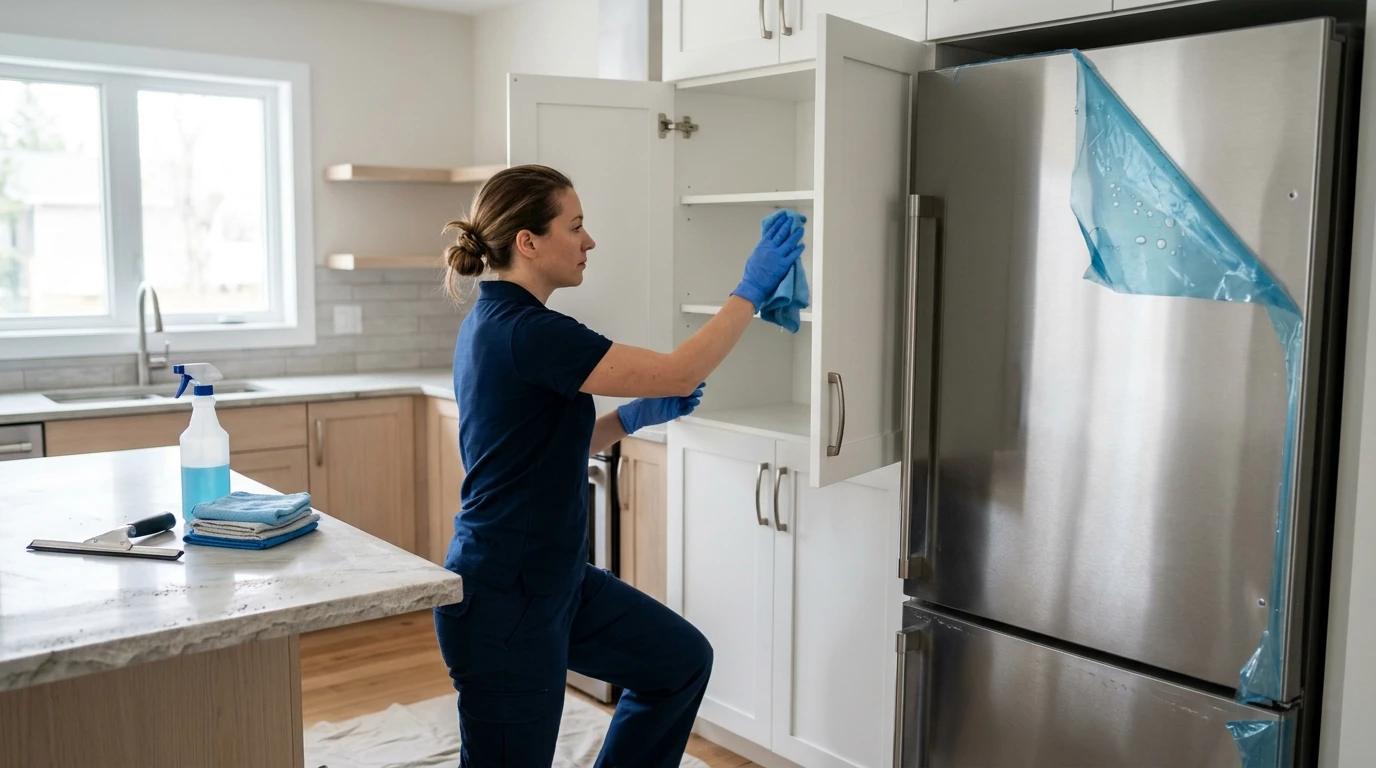
The three phases of post-construction cleaning follow the build itself: each one starts when a particular group of trades is done. The table below shows how they line up.
| Stage | When It Happens | Main Goal | Who Usually Handles It |
|---|---|---|---|
| Rough clean | After framing, plumbing and electrical; before flooring and finishes | A safe, clear site for the remaining trades | The builder’s crew or a cleaning crew hired for this pass |
| Final clean | After trim, paint, fixtures and appliances are in | Every surface clean, top to bottom | A professional cleaning crew |
| Touch-up clean | A few days after the final clean, after punch-list fixes, before move-in | Resettled dust, smudges and fingerprints removed | The same cleaning crew |
You’ll see these stages under different names. The work is the same; only the labels change.
| This Article Calls It | Other Names You’ll See | What It Means |
|---|---|---|
| Rough clean | Phase 1, construction cleanup | Bulk debris and heavy dust while work is ongoing |
| Final clean | Light clean, detailed clean, phase 2 | The thorough, top-to-bottom pass |
| Touch-up clean | Final clean (on some sites), final touch-ups, phase 3 | The last pass before move-in |
Because “final” means the second pass on some quotes and the third on others, ask any cleaning company which passes its price actually covers. On our post-construction cleaning service page, for example, the second pass is called the detailed clean and the third the final touch-ups: the same work this article calls the final clean and the touch-up clean.
Stage 1: Rough Clean
The rough clean happens after framing, plumbing and electrical rough-in, and usually before flooring, cabinets and finishes go in, so debris doesn’t get ground into new surfaces. Typical rough clean tasks:
- Hauling out offcuts, packaging and scrap drywall and wood.
- Picking up loose screws, nails and other sharp debris that cause injuries and scratch new floors.
- Removing heavy dust with damp sweeping or a HEPA vacuum rather than a dry broom.
- Clearing walkways, stairs and entrances so trades can move materials safely.
- Taking down the bulk of protective plastic and tape in areas where the trades are finished.
- Vacuuming subfloors before flooring, cabinets or appliances are installed.
What the rough clean doesn’t include: wiping, polishing or detailing. Anything detailed at this point gets dusty again as soon as the next trade starts cutting or sanding.
Stage 2: Final Clean
This is the stage most people mean when they ask what post construction cleaning includes. In construction terms, the final clean starts once trim, paint, fixtures, cabinets and appliances are installed and no trade is still cutting or sanding. It’s the longest and most labor-intensive pass, and it works from the top of each room down, so falling dust lands on surfaces that haven’t been cleaned yet. What’s included, in that top-down order:
- Ceilings and corners cleared of dust and cobwebs.
- Light fixtures and ceiling fan blades dusted and wiped.
- Vent grilles and return covers dusted and wiped.
- Walls damp-wiped to remove sanding dust.
- Windows cleaned, along with frames, sills and tracks.
- Doors, door frames and hardware wiped down.
- Cabinets and drawers cleaned inside and out.
- Countertops cleaned and residue removed.
- Appliances cleaned inside and out, with protective film peeled off.
- Bathrooms detailed: tub, shower crevices, toilet, vanity and mirrors, with surfaces left dry.
- Baseboards and trim wiped along their full length.
- Stickers, labels, paint specks and adhesive taken off glass, fixtures and appliances (here’s how to remove sticker residue without scratching the surface).
- Floors last: vacuumed, then damp-mopped on hard surfaces; carpet vacuumed thoroughly.
Stage 3: Touch-Up Clean
The touch-up clean comes a few days after the final clean. Fine dust keeps settling out of the air after the work stops, more comes out of the heating and cooling system once it runs, and punch-list fixes like paint touch-ups or a swapped light fixture leave fresh dust and fingerprints. The touch-up is a lighter pass: dusting horizontal surfaces again, removing smudges from glass and stainless steel, re-dusting vent grilles, and a last vacuum and mop.
Before you sign off, walk the space yourself. In our experience, these are the spots that most often get missed:
- Run a fingertip along the tops of door frames, window casings and upper cabinets.
- Open every cabinet and drawer and check the shelves and corners.
- Look into window tracks and along sills.
- Check baseboards with a flashlight held low, so side light shows any leftover dust.
- Look at vent grilles, ceiling fan blades and light fixtures.
- Check glass, mirrors and appliance fronts for leftover sticker residue or film.
- Check shower and tub corners and the caulk lines around them.
- Ask whether the HVAC filter was changed after the dusty work ended.
If dust still keeps coming back weeks after the touch-up, look at the usual causes of a house that stays dusty, starting with the furnace filter.
Post-Construction Cleaning Checklist by Stage
Use this post construction cleaning checklist to see what should already be done after each pass, so you can tell a missed task from work that simply comes later.
| Area | Rough Clean | Final Clean | Touch-Up Clean |
|---|---|---|---|
| Floors | Debris removed, subfloor vacuumed | Vacuumed and damp-mopped; carpet vacuumed | Last vacuum and mop |
| Walls & trim | Loose dust removed | Damp-wiped; baseboards detailed | Marks spot-cleaned |
| Windows & glass | Large stickers removed | Glass, frames, sills and tracks cleaned | Smudges and fingerprints removed |
| Cabinets & counters | Debris cleared out | Wiped inside and out | Tops re-dusted |
| Kitchen appliances | Packaging removed | Film off; inside and outside cleaned | Stainless steel polished |
| Bathrooms | Debris cleared out | Tub, shower, toilet, vanity and mirrors detailed | Final wipe and shine |
| Vents, fans, lights | Not yet | Grilles, fan blades and fixtures dusted | Grilles re-dusted |
| Doors & hardware | Not yet | Doors, frames and handles wiped | Fingerprints removed |
Who Does What: The Builder’s Cleanup vs. a Professional Clean
Most builders remove their own materials, tools and equipment, plus the dumpster and the bulk debris. Beyond that, the scope depends entirely on the contract. Read the cleanup clause before the job ends and ask two questions: is a “final clean” included, and which pass does that phrase mean? A builder’s cleanup is usually closer to a rough clean than to the detailed work described above, so everything in the final and touch-up passes often falls to the owner.
Some commercial projects also contract daily site cleaning during construction, which doesn’t replace the cleaning at the end. Outside the building, pressure washing siding and walkways and clearing gutters is normally handled by an exterior or pressure-washing contractor, and any construction debris left in the yard goes back to the builder.
Offices, retail stores and medical suites finishing a build-out follow the same three passes before opening, and an ongoing commercial cleaning schedule can take over from there. For small cosmetic projects, like repainting a bedroom or replacing a vanity, post renovation cleaning is often manageable on your own; this guide on how to clean your house after a renovation walks through it room by room. Larger remodels and new builds, where dust has reached every room, are where a staged professional clean pays off.
How Pros Keep Construction Dust from Spreading (and What Your HVAC Has to Do with It)
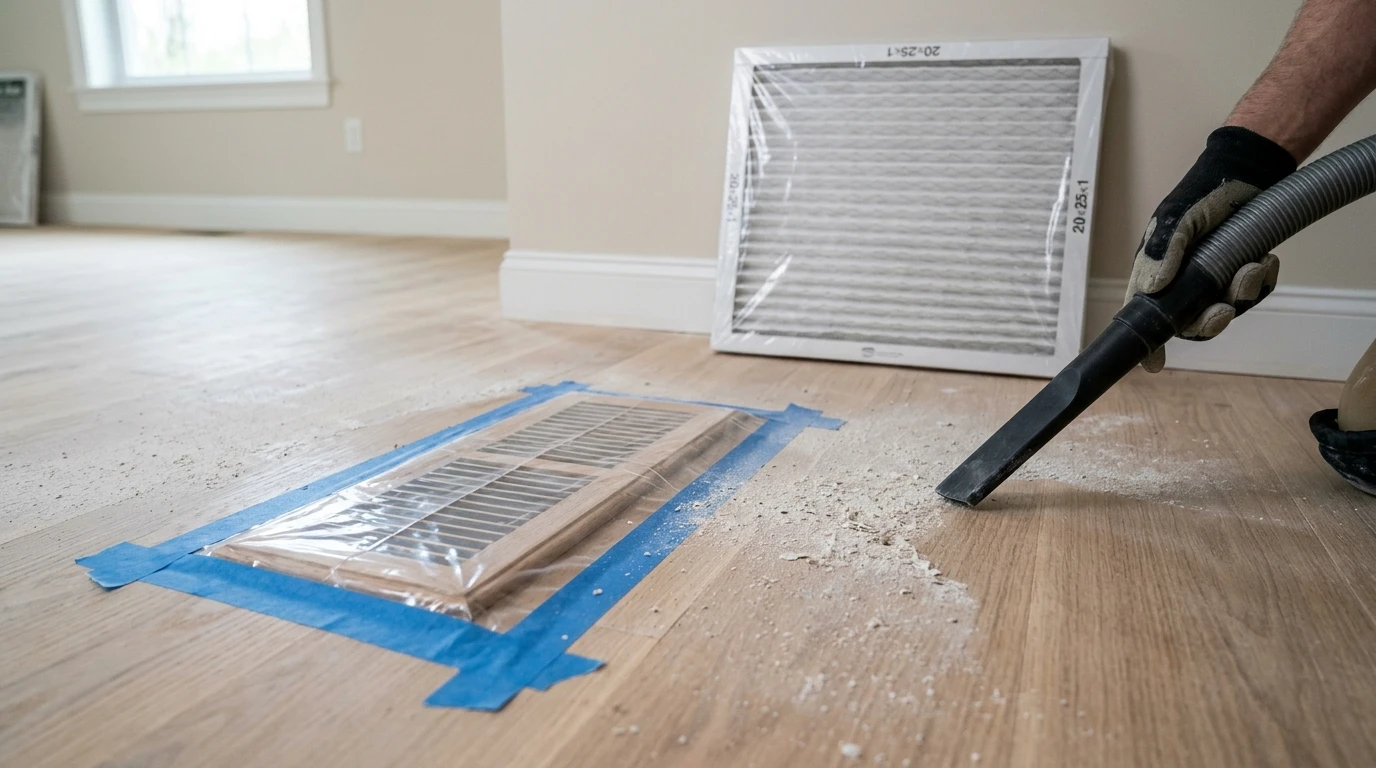
Cleaning visible surfaces is only half the job; the other half is keeping fine dust from traveling through the house and settling again:
- HEPA vacuuming and damp wiping instead of dry sweeping or blowing. It’s the same reason OSHA’s silica rule limits dry sweeping and compressed air on job sites: both put fine dust back into the air you breathe.
- Seal the registers and keep the system off. According to the EPA’s guide to air duct cleaning, during construction or renovation work that produces dust you should seal off supply and return registers and not run the heating and cooling system until the dust has been cleaned up.
- Swap the filter after the dusty work. The same EPA guide recommends the highest-efficiency air filter your system’s manufacturer recommends, changed more often if it clogs.
- Ventilate after new materials go in. Paint, finishes and new flooring can off-gas pollutants. The EPA’s best practices for indoor air quality when remodeling note that the typical recommendation is maximum ventilation during installation and for at least 72 hours after it’s completed.
- Duct cleaning is a separate trade. EPA doesn’t recommend routine duct cleaning, only as needed, for example when ducts are clogged with excessive amounts of dust and debris. A cleaning crew wipes the vent grilles; an HVAC or duct-cleaning contractor handles the ducts themselves.
In Wisconsin, a lot of renovation work happens during the heating season with the windows shut, and the furnace is the first thing people want back on. If it can’t stay off, keep the registers in the work area sealed until the final clean is done, then change the filter before running it normally.
Renovating a Pre-1978 Wisconsin Home? Lead-Safe Cleanup Comes First
If your house was built before 1978, the paint being sanded, cut or scraped may contain lead, and that changes who cleans what. The Wisconsin Department of Health Services’ Lead-Safe Renovation Rule covers renovation work on homes and child care centers built before 1978, and DHS is authorized by the EPA to administer and enforce it here.
Under the federal work practices in 40 CFR 745.85, the renovator’s own cleanup includes HEPA-vacuuming the work area, wiping surfaces with a damp cloth, and mopping hard floors with a method that keeps wash water separate from rinse water, such as two buckets. After that comes cleaning verification: windowsills, floors and countertops are wiped with wet disposable cloths and compared against an EPA cleaning verification card, with large surfaces divided into sections of less than 40 sq ft. Any section that fails is cleaned again; if it fails a second time, the renovator waits 1 hour or until the surface has dried, whichever is longer, before a final dry-cloth wipe.
According to the EPA’s Renovation, Repair and Painting Program, the rule generally doesn’t apply to homeowners working on their own pre-1978 home, but it does apply to rentals, home child care centers and homes renovated to sell. Either way, the order of work should look like this:
- The certified renovator finishes lead-safe cleanup and cleaning verification.
- The cleaning crew’s rough and final cleans follow.
- The touch-up clean comes last, right before move-in.
To be clear about the split: a cleaning crew doesn’t test for lead or perform lead cleaning verification. If you’re not sure whether your project disturbed old paint, ask your renovator before the cleaners arrive.
How to Schedule Each Stage (and Prepare for It)
Clean too early and you clean twice. These steps keep new construction cleaning and renovation cleanups on track:
- Book the cleaning crew before the build wraps up, and agree in writing which passes are included.
- Schedule the rough clean for when the rough-in trades (framing, plumbing, electrical) finish.
- Schedule the final clean for after the last trade has stopped cutting and sanding.
- Make sure water and power are on, and keep the HVAC off or its registers sealed as described above.
- Have the builder remove large debris, equipment and the dumpster before the final clean.
- Book the touch-up a few days later, after punch-list fixes are done.
- Move furniture in only after the touch-up, so you’re not cleaning around boxes.
Once the touch-up is done, a new home is ready to live in. If you’re moving into a finished new build that someone else managed, a move-in cleaning covers the same ground before your things arrive. Cost depends mainly on square footage and how much dust the project left; the post-construction cleaning cost calculator gives you a starting estimate for your space.
What to Expect When Badger Luxe Cleaning Handles Your Final and Touch-Up Cleans
When we take on a post-construction job, we start by agreeing on which passes you need and what your project actually left behind, then build a customized cleaning checklist around your rooms, finishes and timeline rather than working from a generic template. The work is done by background-checked, highly trained local cleaning professionals.
We use non-toxic, eco-friendly green cleaning products, which matters in a freshly finished space, especially one closed up against a Wisconsin winter. You can book a one-time clean with no long-term contract, and our pricing is transparent, so you know what each pass covers before we start.
FAQ
How long does post-construction cleaning take?
It depends on the square footage, how dusty the work was, and how many passes you book. It’s spread over several visits by design (rough during construction, final after the trades, touch-up a few days later), so ask for a time estimate per pass once the company has seen the space.
What’s the difference between a rough clean and a final clean?
A rough clean removes bulk debris, sharp scraps and heavy dust while construction is still going. A final clean happens after the work is finished and details every surface from ceiling to floor. One clears the site; the other makes it livable.
Is post-construction cleaning necessary if my builder already cleaned up?
Usually, yes. A builder’s cleanup typically means removing materials, equipment and large debris, not wiping walls or detailing bathrooms, so check your contract’s cleanup clause first.
What does post-construction cleaning include, and what doesn’t it include?
It includes debris and dust removal, every surface wiped top to bottom, cabinets and appliances cleaned inside and out, bathrooms detailed, residue removed and floors cleaned. It doesn’t include duct cleaning, exterior pressure washing, lead testing or verification, or paint and drywall repairs. Those belong to HVAC, exterior and renovation contractors.
Do I need a touch-up clean, or is one final clean enough?
For most renovations and new builds, the touch-up is worth it. Dust keeps settling for days after the final clean and punch-list fixes leave new marks, so skipping it often means wiping everything again yourself after move-in.
When can I turn the furnace or AC back on after a renovation?
EPA guidance is to keep the heating and cooling system off until the construction dust has been cleaned up. After the final clean, change the filter and run the system normally; if you must run it earlier, keep the work-area registers sealed.
If you’re finishing a renovation or new build in Green Bay or anywhere else we serve in Wisconsin, tell us where your project is and which stages you need, and we’ll put together a checklist that fits it. Call us at (920) 777-9609 or email nathan@badgerluxecleaning.com.