Let’s be honest: we’ve all had that moment. You walk into the office Monday morning, coffee in hand, ready to conquer the world, and then you see it. Maybe it’s a sticky ring on the breakroom counter or a mysterious gray salt stain trailing across the carpet. It’s a small thing, sure, but it tugs at the back of your mind. A cluttered or dusty workspace doesn’t just look messy; it feels heavy. It affects how we think, how we create, and, especially here in Green Bay, how we survive the long winter months when we’re all cooped up indoors.
Running a professional space is a bit like conducting an orchestra because everything needs to be in sync. But between high foot traffic and the daily chaos of a busy team, maintaining that “Day One” sparkle is a lot harder than it looks.
Identifying Common Office Cleaning Challenges for Green Bay Businesses
If you’re managing an office in De Pere or Ashwaubenon, you know our local weather isn’t exactly kind to floors. We deal with a unique set of hurdles that go beyond just emptying the trash bins. From the slushy mess at the front door to the invisible dust settling on the HVAC vents, the struggle is real.
When we talk to local business owners, a few themes keep popping up. It’s rarely just about “dirt”; it’s about the logistics of keeping a professional environment healthy. Some of the most common hurdles include:
High foot traffic (heavy boots tracking in mud, slush, and that dreaded Wisconsin road salt)
Inconsistent cleaning schedules (realizing the “weekly” wipe-down isn’t cutting it for a team of twenty)
Poor communication with vendors (leaving notes that never seem to get read, or wondering if the keyboards were actually touched)
Hidden grime (areas that look “fine” at a glance but are harboring allergens and bacteria)
Finding effective office cleaning solutions means looking past the surface. It’s about creating a space where your team feels respected and safe.
Managing High-Traffic Areas and Shared Workspaces
The modern office has changed. We’ve traded cubicles for open layouts and “hot-desking,” which is great for collaboration but a nightmare for workplace hygiene standards. When a desk is shared by three different people throughout the week, the risk of cross-contamination prevention failing goes through the roof.
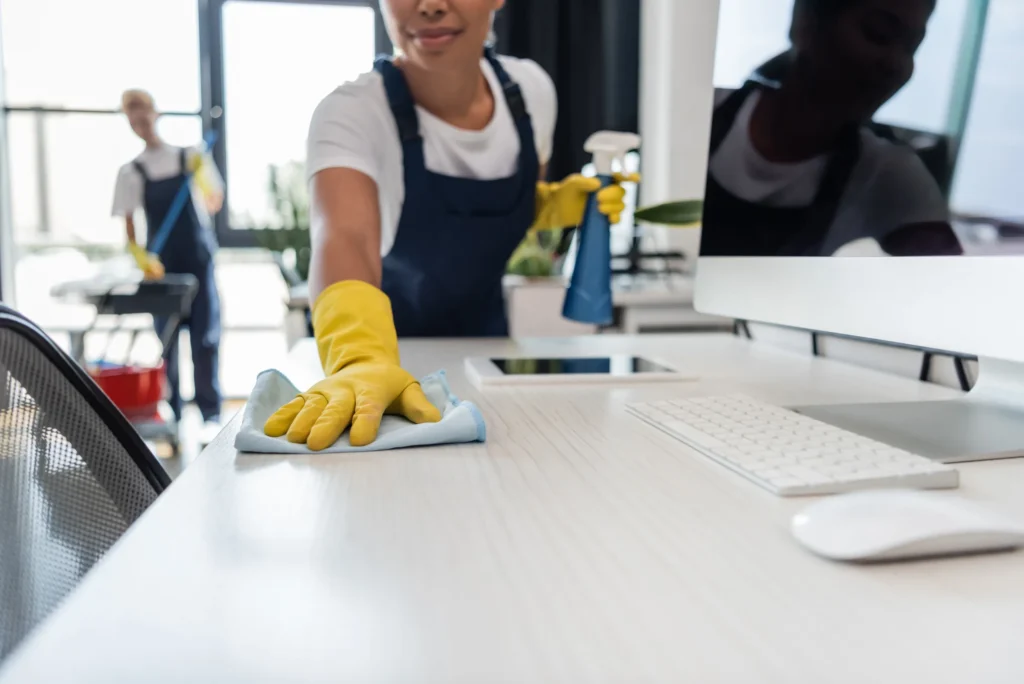
Shared workspace cleaning requires a much more aggressive approach to touchpoint disinfection. Think about the “high-touch” zones: the arms of the chairs, the edge of the communal table, and the light switches. These spots need a level of sanitation protocols that a quick feather-dusting just can’t provide. If you’re noticing that one cold is making the rounds through the entire department, your shared spaces might be the culprit.
Balancing After-Hours Cleaning with Security Protocols
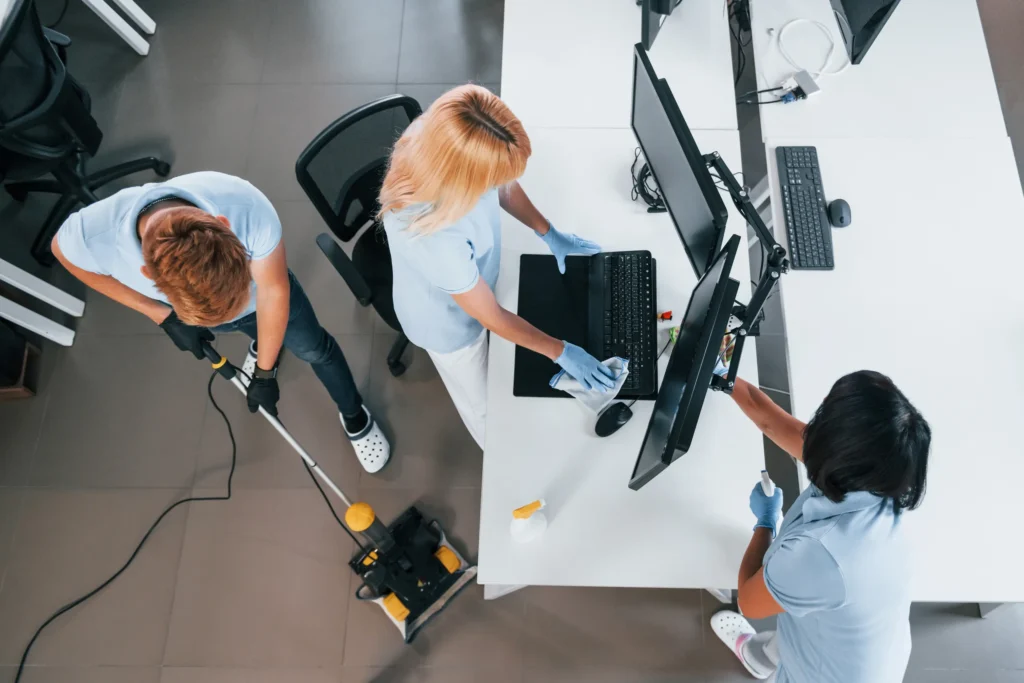
One of the biggest logistical puzzles is “when” to clean. No one wants to be brainstorming a big project while a vacuum is roaring three feet away. This is why after-hours office cleaning is usually the gold standard for professional environments.
It’s not just about noise, though; it’s about trust. Your office holds sensitive data, expensive tech, and personal belongings. Choosing a partner who understands janitorial service standards and respects your building’s security protocols is essential. There’s a certain peace of mind that comes with locking up at night and walking into a fresh, neutralized environment the next morning without ever having seen the “magic” happen.
Mapping Office Germ Hotspots: Where Bacteria Hide
My background in science makes me a bit of a nerd about what we “can’t” see. You’d be surprised (and maybe a little grossed out) to learn that the average office desk can hold hundreds of times more bacteria than a toilet seat. We tend to clean what looks dirty, but the real threats are often the things we touch the most without thinking.
When things get a little too “lived-in,” a standard wipe-down isn’t enough. For those times when the office feels genuinely grimy or you’re coming off a heavy flu season, using office deep cleaning services can act as a total reset button for your environment.
Top germ hotspots to watch:
Breakroom sinks and faucets (damp environments are a playground for mold and bacteria)
Microwave handles (handled by everyone, cleaned by… almost no one)
Elevator buttons and door handles (the ultimate transit point for germs)
Shared keyboards and mice (think of all the “desk lunches” those keys have seen)
The Impact of Professional Office Carpet Cleaning on Indoor Air Quality
We often think of carpets as a comfort feature, but in a Green Bay business maintenance context, they’re actually giant filters. They trap dust, pollen, and indoor air quality pollutants. But like any filter, they eventually get full.
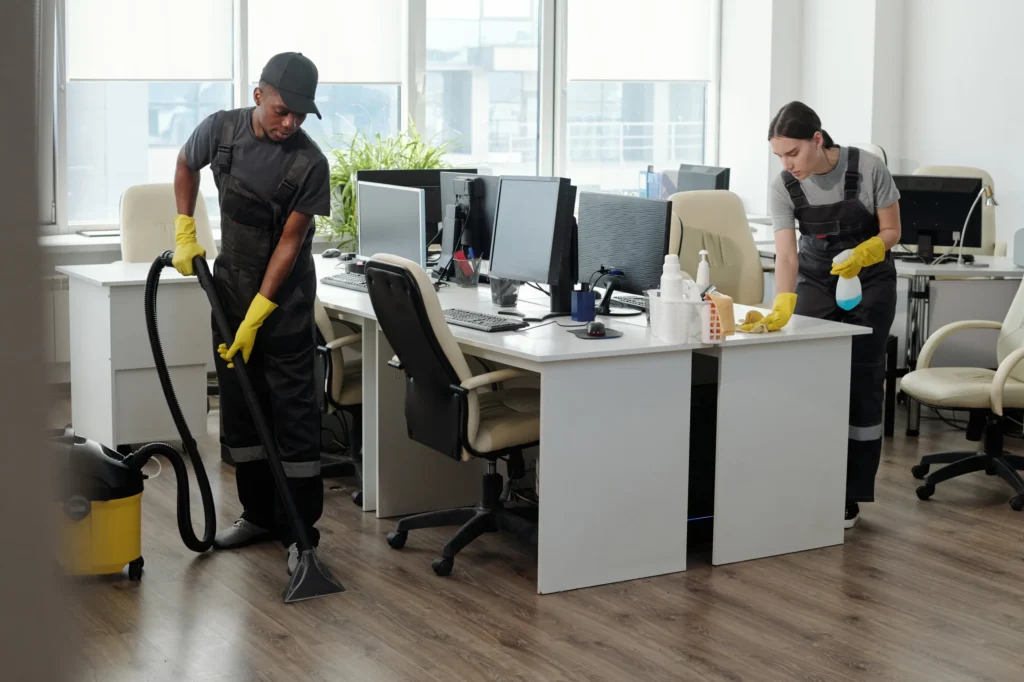
Regular office carpet cleaning isn’t just for aesthetics; it’s a health necessity. When carpets are saturated with dirt and salt, every footstep kicks those particles back into the air your team is breathing. If your carpets are looking matted or smelling a bit “musty” after a wet spring, comprehensive deep cleaning services are the best way to pull that debris out from the roots of the fibers, extending the life of your flooring and helping everyone breathe a little easier.
Establishing the Right Office Cleaning Frequency for Your Team
There’s no one-size-fits-all answer here. A boutique law firm in downtown Green Bay has very different needs than a high-traffic tech hub near Lambeau Field. The goal is to find a recurring cleaning plan that feels proactive rather than reactive.
Office Type
Recommended Frequency
Key Focus Areas
Small Boutique
1–2 times per week
Entryways, restrooms, trash removal
Mid-Size Corporate
3 times per week
Breakrooms, high-touch surfaces, vacuuming
Large High-Traffic Hub
Daily / Nightly
Total floor care, restroom sanitization, shared desks
Shared Workspace Cleaning: Navigating the Hybrid Work Era
With many teams rotating in and out of the office, we’ve seen a shift toward the “clean desk policy.” It’s a great start, but it relies on employees doing the heavy lifting. To truly maintain professional cleaners for offices standards, you need to provide the tools, like sanitization stations, while ensuring the heavy-duty surface disinfection techniques are handled by pros who have the commercial-grade equipment to do it right.
Best Practices for Selecting Professional Cleaners for Offices in Green Bay
Choosing a cleaning partner is a big deal. You’re handing over the keys to your professional “home.” Here’s how I suggest vetting your options:
Verify insurance and local references (make sure they’re covered and have a good reputation in the Fox Valley)
Review customized cleaning checklists (don’t settle for a generic “sweep and mop”; ensure they address your specific facility management solutions)
Evaluate communication tools (how do you reach them if a coffee spill happens at 10 AM?)
Confirm use of commercial-grade disinfectants (ensure they’re using the right chemistry to actually kill germs, not just move them around)
Frequently Asked Questions About Commercial Office Maintenance
Have a question about one of our services? We have answers. Please reach out if you have any questions for us!
How often should carpets be cleaned in a high-traffic Green Bay office?
In our climate, high-traffic areas usually need a professional deep clean every 3 to 6 months. During the winter, you might need more frequent "spot" cleaning to handle the salt buildup before it ruins the fibers.
What are the most common cleaning challenges in corporate offices?
The big ones are maintaining high-touch surfaces (germs), managing shared workspaces (accountability), and keeping up with commercial flooring maintenance during the messy Wisconsin seasons.
Why is after-hours cleaning preferred for professional environments?
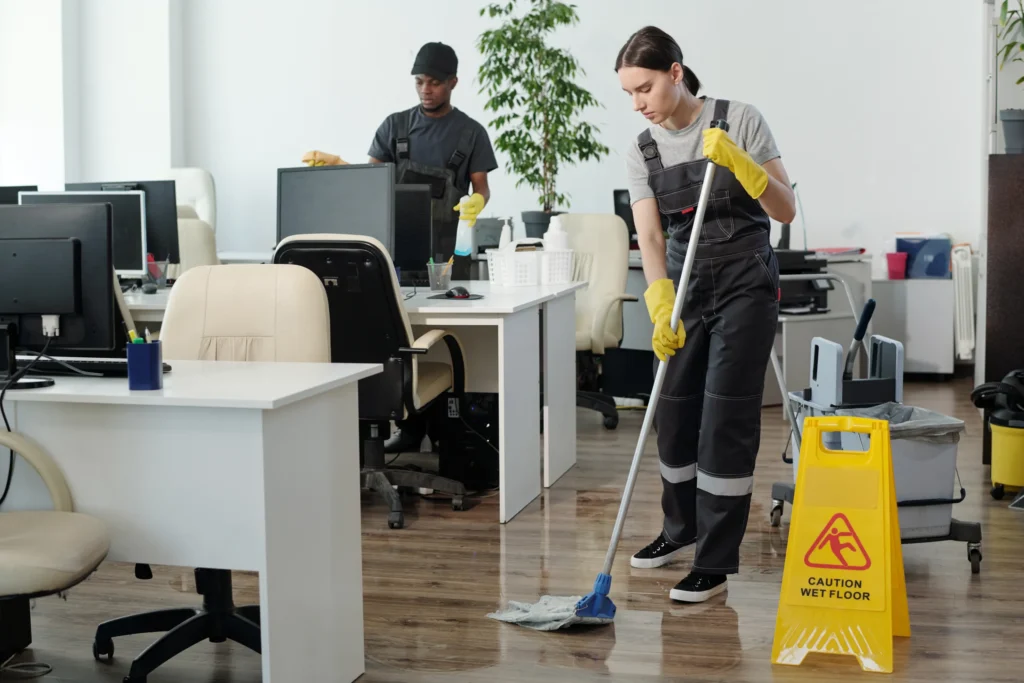
It’s all about zero disruption. Your team can focus on their work, and the cleaners can use more intensive methods, like those required for office germ hotspots, without anyone walking over a wet floor or being distracted by noise.
Graymond Santos writes the blog posts for Badger Luxe Cleaning, sharing practical tips and creative insights on cleaning and organization. He studied Electronics Engineering for two years at the Technological University of the Philippines in Manila and graduated with honors from Cavite National High School under the Science, Technology, Engineering, and Mathematics (STEM) strand. As part of a group, he contributed to Viajero, a Best Research Award-winning app that celebrates innovation, technology, and the history of Cavite. A lifelong writer and former student journalist with a focus on science and technology, Graymond brings curiosity, creativity, and thoughtful perspective to every post.
Want a Cleaner Workplace?
Our commercial cleaning service is built around your space and your schedule, from small offices to larger buildings.