Infection Control Checklist for Dental Clinics

Cleaning ServicesBlogInfection Control Checklist for Dental Clinics
dental office cleaning services

The Importance of Strict Infection Control Protocols

Dental clinics need more than just regular cleaning services due to the nature of the work. That’s why an infection control protocol for dental offices matters. It’s not only about making things look neat. It’s about lowering cross-contamination with the right steps and products.

Good dental infection control takes training and the right equipment. Not every cleaning team has the knowledge to use medical-grade disinfectants correctly, follow proper dwell times, and handle sensitive areas without creating risk. We clean with these stricter expectations in mind and follow CDC dental infection control guidelines.

Dental Operatory Cleaning Checklist

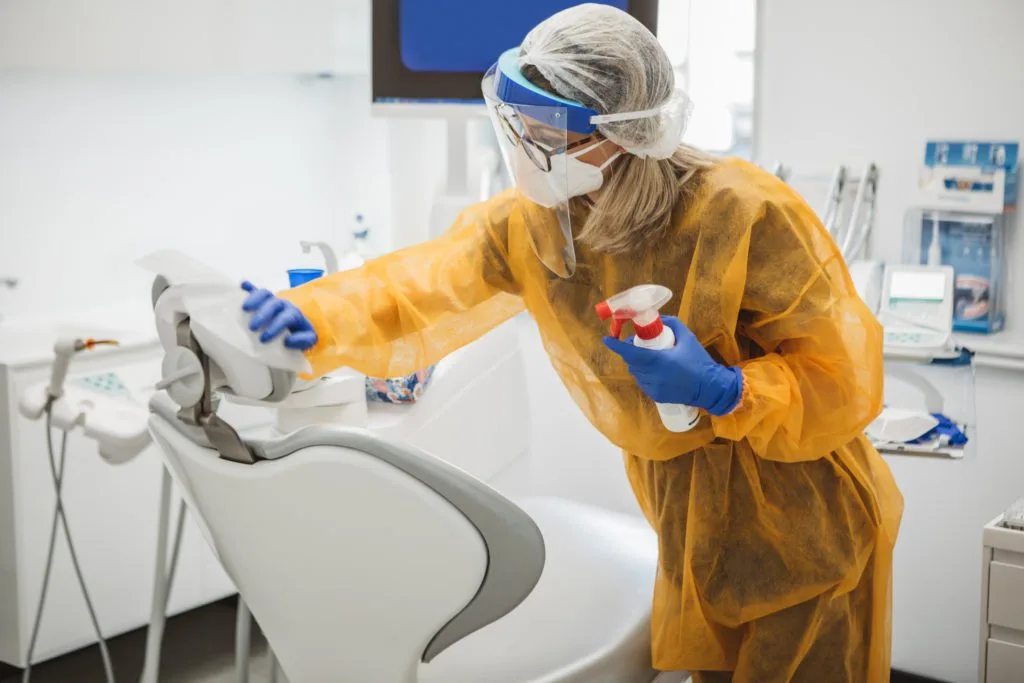
A dental operatory needs a more thorough cleaning. This is a high-use space with strict hygiene requirements, so the steps must be consistent every time. A clear dental operatory cleaning checklist helps keep the process efficient. 

Between-Patient Disinfection Steps

  • Remove and replace barriers. We swap out disposable covers on any protected touchpoints (based on your setup).
  • Clear visible debris. We remove used items and dispose of waste properly.
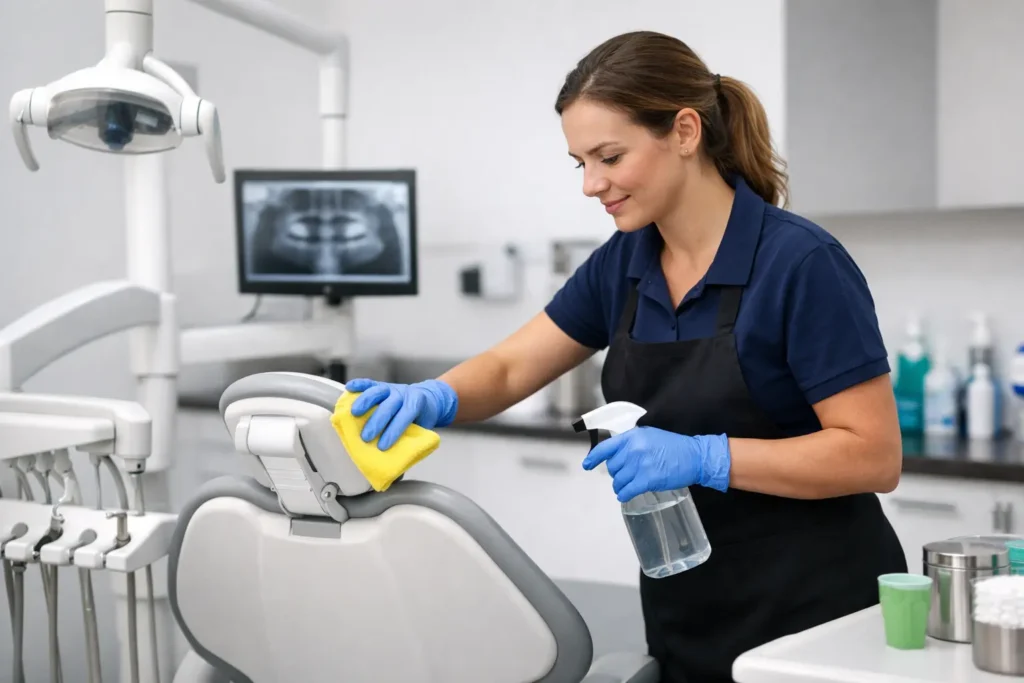
  • Wipe, then disinfect surfaces. We clean the patient treatment area first, then disinfect it with the appropriate products.
  • Patient chair touchpoints. We wipe and disinfect the chair, armrests, and headrest.
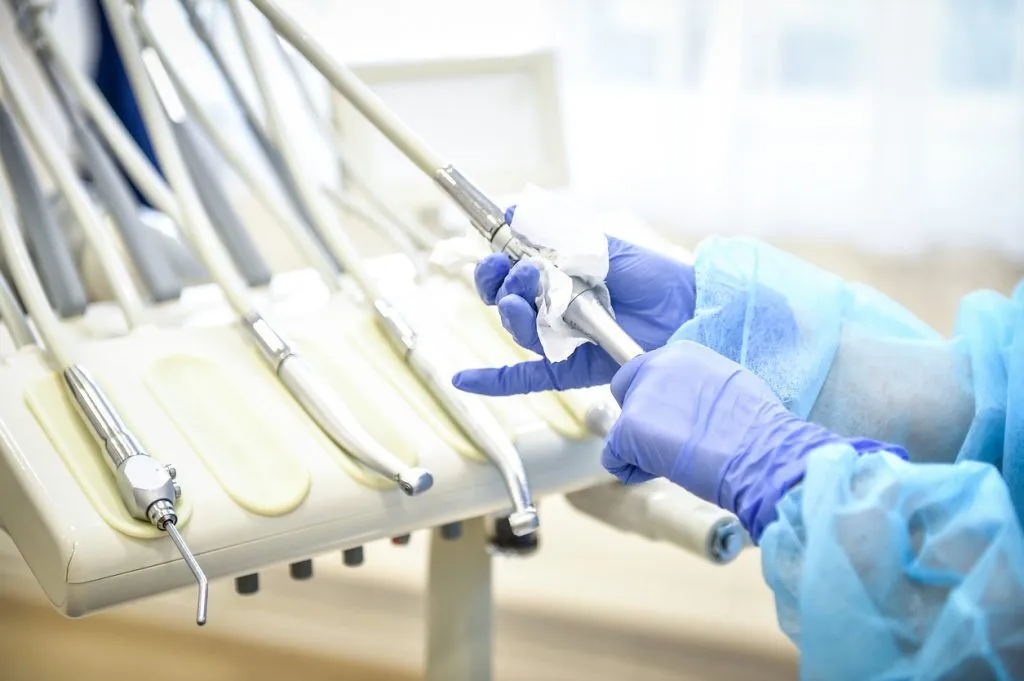
  • Equipment touchpoints. We disinfect controls and handles that are touched during the visit (such as X-ray equipment).
  • Handles and knobs. We disinfect drawer pulls, cabinet handles, door knobs, and faucet handles.
  • Sink area. We wipe splashes and disinfect the faucet and sink area.

Daily Operatory Shutdown Routine

At the end of the day, we do a full operatory reset so the clinic is ready for the next morning. We properly remove and dispose of waste, replace liners as needed, and wipe down and disinfect key surfaces one last time. We also handle end-of-shift steps your team requires, like flushing systems and clearing the sink area, so nothing is left sitting overnight. Floors get vacuumed or mopped, and we make sure the operatory is clean.

medical office cleaning checklist

Dental Sterilization Room Requirements & Workflow

Here are some dental sterilization room requirements to keep in mind:

  • Dirty zone. Used instruments arrive here first. They’re contained, cleaned (often with an ultrasonic cleaner or washer), and handled with PPE to reduce exposure risks.
  • Clean zone. Instruments are inspected, dried, packaged, and then loaded for sterilization. Packaging matters because instruments should usually be sterilized, wrapped, and not loose.
  • Autoclaving and storage. A steam sterilizer (autoclave) runs according to the manufacturer’s time and temperature settings; once the cycle is complete, the items dry and are moved to sterile storage. Sterilizers should be monitored with indicators, including routine (often weekly) biological testing, and some regions may require more.

Dental Waterline Maintenance and Safety

Dental waterlines can accumulate biofilm within the tubing, so the water system needs its own routine. That’s why dental waterline maintenance often shows up in inspections.

Follow the dental unit manufacturer’s instructions, treat the lines on a set schedule, and test the water routinely to confirm it meets drinking water standards (typically <500 CFU/mL).

For surgical procedures, guidance is to use sterile solutions delivered in a way that bypasses the dental unit waterlines.

General Medical Office Cleaning Checklist: Waiting Areas & Restrooms

Waiting areas and restrooms get touched and used all day in any clinic. That’s why a clear medical office cleaning checklist matters. The same approach is part of dental office cleaning services, too, since dental clinics have similar shared spaces and hygiene requirements.

Reception and Front Desk Sanitization

We keep the reception and front desk clean because it’s the first thing patients notice. We wipe and disinfect the front counter and check-in area, plus shared items like pens and clipboards (as allowed). We also disinfect touch spots like door handles, light switches, and any buttons or screens used for check-in. We clean glass and counters, empty the trash, and vacuum or mop the entry floor.

Restrooms and Staff Break Rooms

Restrooms and staff break rooms need extra attention because germs spread easily in these areas. We clean and disinfect toilets, sinks, counters, faucets, and touchpoints like handles and switches. Supplies get checked and restocked (if provided), and trash is removed. In break rooms, we wipe down tables, counters, and sinks, and clean the exteriors of shared appliances like microwaves and fridges. Floors are vacuumed or mopped, with extra attention paid to sinks.

dental infection control

Ensuring OSHA Compliance for Dental Offices

For OSHA compliance for dental offices, clean isn’t enough. You need documented safety steps that protect staff from bloodborne exposure and chemical hazards.
 
Core documents to have on file:

  • Exposure Control Plan. Written plan for bloodborne pathogen risks, reviewed and updated at least annually (including safer device review).
  • Hazard Communication program. Written HazCom program, container labels, and Safety Data Sheets (SDS) that are easy to access during each shift.
  • Post-exposure process. Written steps for what happens after an exposure incident, including medical evaluation and follow-up.

Staff safety checklist:

  • Training. Initial and ongoing training for bloodborne pathogens and chemical hazards.
  • PPE provided by the employer. Gloves, masks, eye protection, etc., are provided and maintained at no cost to employees.
  • Hepatitis B vaccine is offered to employees with occupational exposure, plus post-exposure evaluation when needed.

Sharps and injury logs:

  • Contaminated sharps injuries. Must be recorded when OSHA recordkeeping applies. Sharps log requirements depend on whether you’re required to keep OSHA injury/illness logs.
  • State rules. Some state OSHA plans can be stricter than federal rules, so it’s worth checking your state requirements.

Heads-up on HazCom updates:

  • OSHA updated HazCom in 2024 and, in January 2026, extended some compliance dates, including employer program updates and training deadlines for certain substances.

When to Hire Professional Dental Office Cleaning Services

Dental teams focus on patients. At the same time, a cleaning team focuses on maintaining the clinic’s cleanliness. That’s why dental office cleaning services matter. We also understand CDC dental infection control guidelines and the inspection-sensitive details that clinics are often asked about, including dental waterline maintenance.

If your clinic needs professional cleaning, we can start with a deep cleaning and then set up a recurring schedule if needed. Contact Badger Luxe Cleaning for a tailored quote. You get the thoroughness of industrial cleaning services, but for clinics.

Dental Clinic Infection Control FAQs

Have a question about one of our services? We have answers. Please reach out if you have any questions for us!

According to CDC guidelines, clinical contact surfaces (light handles, switches, dental chairs) have a high risk of transmitting infection and must be disinfected between every patient. Housekeeping surfaces (floors, walls, sinks) carry lower risk but still require nightly EPA-registered disinfection. Typically, your clinical staff handles the former during the day, while professional cleaners handle the latter after hours to ensure a "terminal clean."

Yes, but with strict limitations. Professional cleaners focus on the floors, counters (if cleared of instruments), and sinks in the "dirty" and "clean" zones of the sterilization room. They do not handle autoclaves, ultrasonic cleaners, or loose instruments. This maintains the hygiene of the room without interfering with the sterilization workflow.

While daily flushing (recommended in our checklist) helps, waterlines should be shock-treated periodically according to the manufacturer's instructions. Professional cleaning services do not typically flush waterlines (this is a clinical task), but we ensure the sinks and drains where flushing occurs are sanitized nightly to prevent biofilm backup.

Dental chairs are expensive and prone to cracking if cleaned with harsh alcohol or bleach. We recommend (and use) barrier-friendly, non-abrasive hospital-grade disinfectants specifically approved for vinyl and leather medical upholstery. Always check your chair manufacturer's warranty before approving a new cleaning product.
General cleaners lack training in "Bloodborne Pathogens" and cross-contamination prevention. In a dental office, using a mop from the restroom in the operatory is a major violation. Specialized dental office cleaning services use color-coded systems and strictly follow OSHA protocols to protect your practice from liability and inspection failures.

Author

  • Graymond Santos

    Graymond Santos writes the blog posts for Badger Luxe Cleaning, sharing practical tips and creative insights on cleaning and organization. He studied Electronics Engineering for two years at the Technological University of the Philippines in Manila and graduated with honors from Cavite National High School under the Science, Technology, Engineering, and Mathematics (STEM) strand. As part of a group, he contributed to Viajero, a Best Research Award-winning app that celebrates innovation, technology, and the history of Cavite. A lifelong writer and former student journalist with a focus on science and technology, Graymond brings curiosity, creativity, and thoughtful perspective to every post.
Scroll to Top

Request a free quote now

PLUS $50 off

your first service