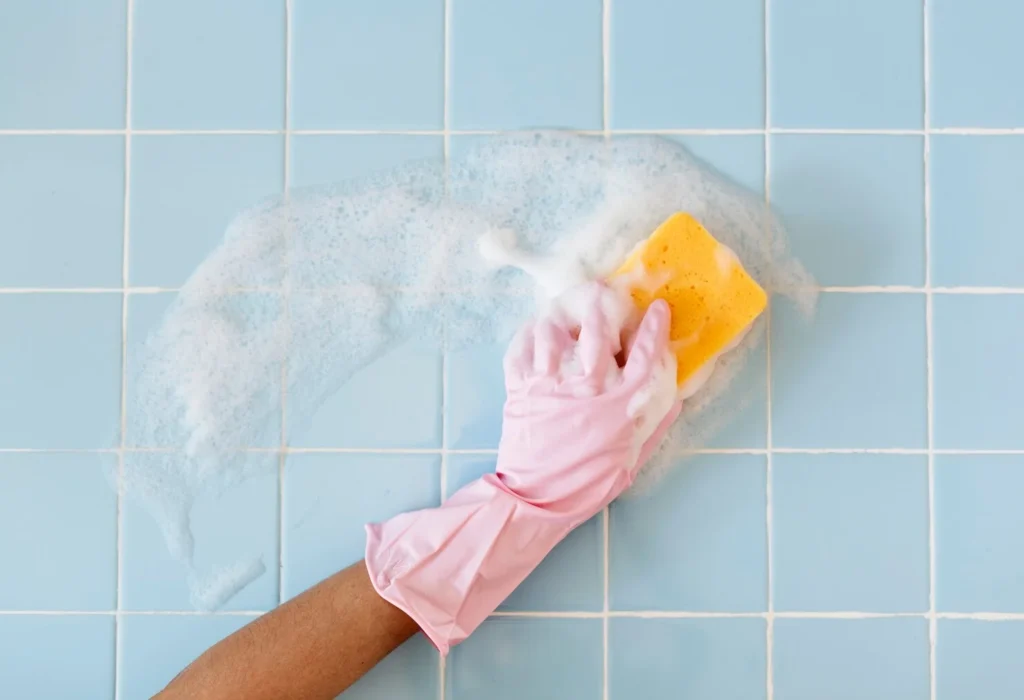
How to Remove Mold From Shower Grout Naturally

Cleaning ServicesBlogHow to Remove Mold From Shower Grout Naturally
mold in shower

We’ve all had that moment. You’re finally stepping into a warm shower after a long, chilly day in Green Bay, WI, hoping for a bit of relaxation, and then you see it. That stubborn, dark speckling creeping along the lines of your tile. It starts small, but before you know it, the grout looks like it’s hosting an unwanted science experiment.

Finding mold in shower corners is frustrating, not just because it looks messy, but because it feels like a personal defeat against the humidity. I’ve spent years looking at the intersection of science and home care, and if there’s one thing I’ve learned, it’s that you don’t need to turn your bathroom into a chemical hazard zone to get a deep clean. If you’re wondering how to get rid of mold in shower spaces without losing your breath to bleach fumes, you’re in the right place. Let’s look at how we can use a little chemistry and a lot of common sense to get those tiles sparkling again.

What Causes Mold to Grow in Shower Grout

To solve a problem, it helps to understand why it’s happening. Mold isn’t just “dirt.” It’s a living organism that loves three things: moisture, warmth, and food. Your shower is essentially a five-star hotel for spores.

Every time we lather up, soap and shampoo residue, along with tiny particles of skin, settle into the porous surface of the grout. Because grout is cement-based, it’s like a hard sponge with microscopic holes. When you add the lingering dampness common in our Wisconsin climate, especially in bathrooms without industrial-strength ventilation, you get the perfect breeding ground for shower mold. It’s a cycle of moisture and organic “food” that makes the grout lines turn gray, orange, or black.

Why It’s Important to Remove Mold and Mildew From Grout

It’s easy to ignore a little bit of mildew in shower crevices for a week or two, but it’s more than just a cosmetic issue. As someone who appreciates the “why” behind the “how,” I always tell people that mold is an active guest.

  • Respiratory Health: Breathing in spores every morning isn’t ideal, especially for kids or those with allergies.
  • Structural Integrity: Over time, mold can actually eat away at the grout, causing it to crumble. This leads to water seeping behind the tiles, which is a much more expensive repair.
  • Aesthetic Peace: There’s a psychological win to standing in a truly clean space. It changes the way you start your morning.

Why Bleach Is Not a Safe Solution for Mold Removal

Most of us were raised to reach for the blue and white bottle the moment we saw a stain. But when it comes to black mold shower issues, bleach is often a “smoke and mirrors” solution.

Health Risks of Using Bleach in Bathrooms

Bathrooms are usually small, enclosed spaces. Even with a fan running, the fumes from bleach can irritate your lungs and eyes. If you’ve ever felt lightheaded after a cleaning session, that’s your body telling you something isn’t right.

Why Bleach Doesn’t Kill Mold at the Root

Here’s the scientific kicker: Bleach is about 90% water. When you spray it on porous grout, the chlorine stays on the surface, “bleaching” the color out of the mold so it looks gone. However, the water part of the solution soaks deep into the grout, actually feeding the roots of the mold that the chlorine couldn’t reach. It’s why the mold seems to come back even faster.

What You’ll Need to Remove Mold From Shower Grout Naturally

We’re going to swap the harsh stuff for things you probably already have in your pantry. These are effective because they change the pH balance that mold needs to survive.

  • White Distilled Vinegar: The acid in vinegar is a natural enemy to most mold species.
  • Baking Soda: This provides a gentle abrasive to lift stains without scratching your tile.
  • Hydrogen Peroxide (3%): An amazing antifungal and brightening agent.
  • A Stiff Grout Brush: Or an old toothbrush if you’re working on tight corners.
  • Microfiber Cloths: To wipe everything down and ensure the surface is dry.

Step-by-Step Guide: How to Remove Mold From Shower Grout Naturally

If you’re ready to learn how to clean mold in shower areas the right way, follow these steps. It’s about letting the ingredients do the heavy lifting so you don’t have to.

Step 1 — Ventilate the Bathroom and Prepare the Area

Even though we’re using natural ingredients, airflow is your best friend. Open a window or turn on the exhaust fan. Clear out your shampoo bottles so you have a clear “canvas” to work on.

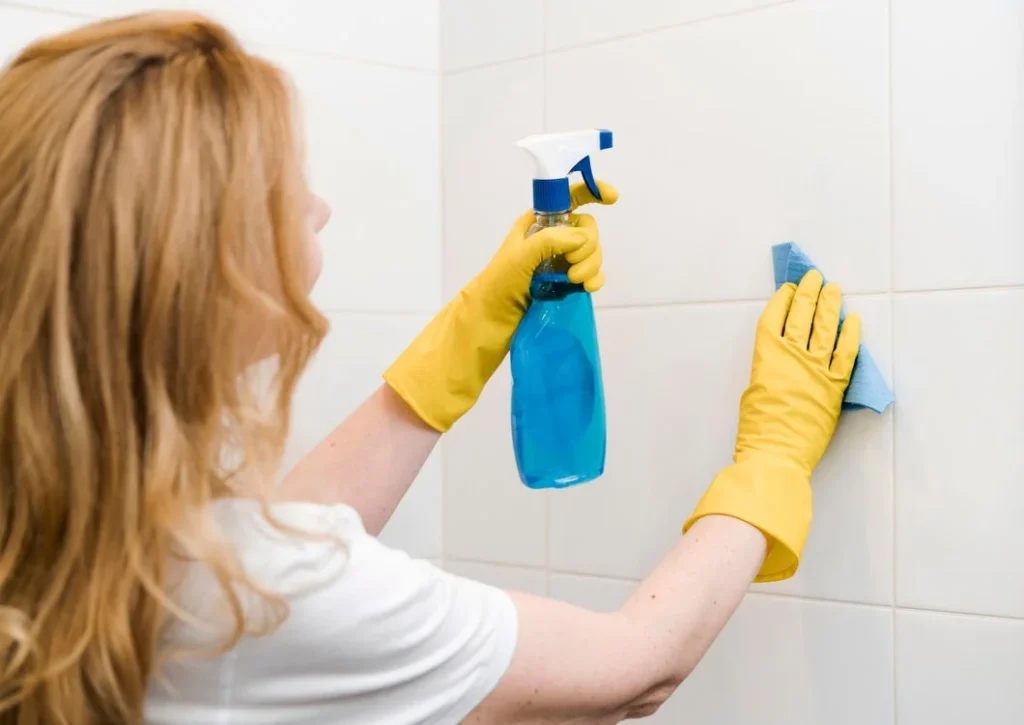
Step 2 — Apply Vinegar or Hydrogen Peroxide to the Grout

Spray straight white vinegar onto the moldy areas. Don’t rinse it off! Let it sit for at least 30 minutes to an hour. If you’re dealing with a particularly stubborn patch, you can use hydrogen peroxide instead.

Step 3 — Scrub the Moldy Grout

After the vinegar has had time to break down the mold’s structure, take your brush and scrub the grout lines. You’ll notice the dark spots starting to lift. This is where the curiosity of “how things work” meets the satisfaction of a job well done.

Step 4 — Use Baking Soda for Stubborn Mold Stains

If there are still shadows left behind, make a paste of baking soda and a little water. Apply it to the grout and spray a bit more vinegar on top. It’ll fizz, that’s the carbon dioxide gas being released — and help lift the deep-set stains.

Step 5 — Rinse Thoroughly and Dry the Shower

Rinse the walls with warm water. This is the most important part: use a dry microfiber cloth to remove all the moisture. Leaving the shower dry is the best way to ensure you won’t be searching for how to remove mold from shower tips again next week.

How to Prevent Mold and Mildew in Shower Grout

Prevention is really just about managing the environment. In Green Bay, WI, our homes go through a lot of temperature shifts, which can lead to condensation.

  1. Squeegee after every use: It takes 30 seconds but removes the moisture mold needs.
  2. Run the fan longer: Keep that bathroom fan going for 15–20 minutes after you get out.
  3. Check the Grout: If you see cracks, it’s time to reseal to prevent water from hiding underneath.

Common Mistakes to Avoid When Cleaning Mold From Grout

One big mistake is using a metal brush. It might seem like a good idea for “extra power,” but it can actually scratch your tile and gouge the grout, creating even deeper pockets for mold to hide in. Another is forgetting to seal your grout. Once your grout is clean and dry, applying a sealer once a year acts like a raincoat for your tile lines.

When Mold in Shower Grout Requires Professional Cleaning

Sometimes, life gets ahead of us. Maybe you’re moving into a new place and the previous owners weren’t as diligent, or perhaps you’re a busy host managing an Airbnb near Lambeau Field and you just don’t have the time to scrub every tiny line of grout. If the mold has spread behind the caulk or if the stains just won’t budge despite your best efforts, it might be time for a deeper intervention. At Badger Luxe Cleaning, we specialize in high-level detail. Whether you need apartment deep cleaning services or a comprehensive move in cleaning service, we bring the right tools and a thoughtful approach to every home. We’ve seen it all, and we know exactly how to clean shower mold so it stays away. If you’re feeling overwhelmed by the grime or just want to reclaim your weekend, we’re here to help. From a standard refresh to a detailed move out cleaning, our team treats your home with the same care and curiosity I bring to my writing. Ready to come home to spotless peace of mind? Let us take the scrubbing off your to-do list. You can view our full range of cleaning services in Green Bay, WI and get your instant quote today.

Author

  • Graymond Santos

    Graymond Santos writes the blog posts for Badger Luxe Cleaning, sharing practical tips and creative insights on cleaning and organization. He studied Electronics Engineering for two years at the Technological University of the Philippines in Manila and graduated with honors from Cavite National High School under the Science, Technology, Engineering, and Mathematics (STEM) strand. As part of a group, he contributed to Viajero, a Best Research Award-winning app that celebrates innovation, technology, and the history of Cavite. A lifelong writer and former student journalist with a focus on science and technology, Graymond brings curiosity, creativity, and thoughtful perspective to every post.

Scroll to Top

Request a free quote now

PLUS $50 off

your first service