If you’re living in Green Bay, WI, you know the struggle is real. Between the winter slush we drag in from the driveway and the dust that seems to settle the second you finish dusting, cleaning wood floors can feel like a full-time job. I’ve seen many homeowners get frustrated because they’re working hard but using the wrong tools. Let’s talk about how to make your floors shine without the headache.
What You Should Know Before Cleaning Wood Floors
Before you grab a bucket, you have to understand what you’re standing on. Not all wood is treated the same, and using the wrong wood floor cleaner can lead to a very expensive mistake.
Types of Wood Floors
Most modern homes have surface-sealed floors, think polyurethane or polyacrylic. These are water-resistant and relatively easy to manage. However, if you’re in one of Green Bay’s beautiful historic homes, you might have oil-treated or waxed floors. These are much more porous and require a gentler touch.
What Can Damage Wood Floors
Water is the natural enemy here. If it sits too long, it seeps into the joints and causes warping. Beyond that, grit is a silent killer. Tiny pebbles from your backyard or salt from the sidewalk can scratch the finish, making the wood look dull over time. According to the City of Green Bay, maintaining the integrity of local home materials is key to preserving our beautiful neighborhoods.
How Often Should You Clean Wood Floors
I like to think of floor maintenance like a science experiment, consistency is the key variable.
- Daily: High-traffic areas like the kitchen or entryway need a quick sweep to keep grit at bay.
- Weekly: Give the whole house a good dust mopping or a safe vacuuming.
- Monthly: This is when you’ll want to use a dedicated wood floor cleaner for a deeper refresh.
What You’ll Need to Clean Wood Floors
You don’t need a chemistry lab’s worth of supplies. In fact, simpler is usually better.
- A microfiber dust mop (it grabs the fine stuff better than a broom).
- A vacuum with a “hard floor” setting (no beater bars!).
- The best cleaner for wood floors (look for pH-neutral formulas).
- Two microfiber mops (one for cleaning, one for drying).
Step-by-Step Guide: How to Clean Wood Floors
If you’re looking for the best way to clean hardwood floors, it’s all about the order of operations.
Step 1 — Sweep or Dust Mop the Floors
Start by clearing the “surface noise.” Use a microfiber mop to pick up hair, dust, and crumbs. If you skip this, you’re just pushing wet dirt around when you start cleaning hardwood floors.
Step 2 — Vacuum Wood Floors Safely
I’m a big fan of using a vacuum for the corners and baseboards where dust likes to hide. Just make sure the rotating brush is turned off so you don’t scratch the finish.
Step 3 — Mop Wood Floors the Right Way
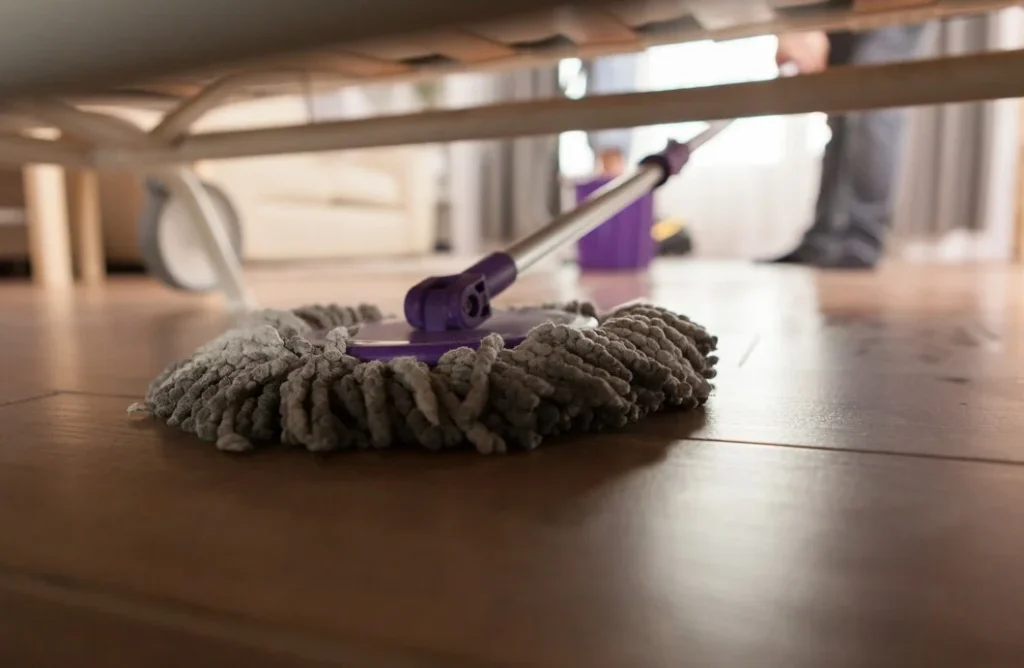
This is where people often go wrong. When you’re learning how to mop hardwood floors, remember: damp, not soaking. Mist your wood floor cleaner directly onto the microfiber pad rather than the floor. It gives you more control and prevents puddling.
Step 4 — Dry and Inspect the Floors
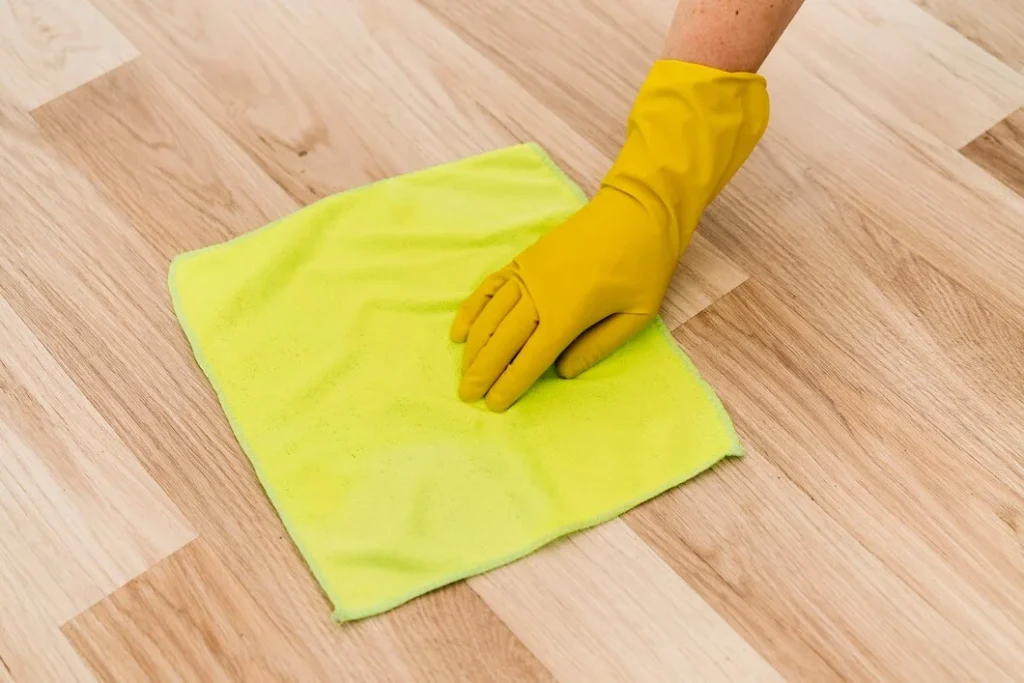
Don’t let the air do all the work. Use a fresh, dry microfiber cloth to buff away any remaining moisture. It prevents streaks and gives you that satisfying glow. This is the best way to clean wood floors without leaving behind those annoying footprints.
How to Deep Clean Wood Floors
Sometimes a regular mop isn’t enough, especially after a big family gathering or a messy Wisconsin winter. To how to clean wood floors properly at a deep level, you might need to work in smaller sections. Using a specialized wood floor cleaning solution helps break down the buildup of waxes or oils that regular mopping misses. When you clean hardwood floors this way, you’re not just moving dirt; you’re restoring the wood’s natural character.
Common Mistakes to Avoid When Cleaning Wood Floors
In my experience, “more” isn’t always “better” when it comes to the best way to clean hardwood floors.
- Using steam mops: High heat and moisture can force water into the wood grain and ruin the adhesive.
- Excessive amounts of water: A soaking wet mop is the fastest way to ruin a floor.
- Vinegar and harsh DIY cleaning solutions: The acid in vinegar can actually eat away at the finish over time.
- Stiff or abrasive brushes: These leave micro-scratches that trap dirt.
When to Call Professionals for Wood Floor Cleaning or Refinishing
Author
-
Graymond Santos writes the blog posts for Badger Luxe Cleaning, sharing practical tips and creative insights on cleaning and organization. He studied Electronics Engineering for two years at the Technological University of the Philippines in Manila and graduated with honors from Cavite National High School under the Science, Technology, Engineering, and Mathematics (STEM) strand. As part of a group, he contributed to Viajero, a Best Research Award-winning app that celebrates innovation, technology, and the history of Cavite. A lifelong writer and former student journalist with a focus on science and technology, Graymond brings curiosity, creativity, and thoughtful perspective to every post.