Cleaning Vinegar vs. White Vinegar: When to Use Each One

Cleaning ServicesBlogCleaning Vinegar vs. White Vinegar: When to Use Each One

Cleaning vinegar and white vinegar sound almost the same, but they’re actually not. Both are popular for cleaning everything from clothes and floors to windows and some electronic casings, so it helps to know which one you’re using. So, is cleaning vinegar the same as white vinegar, and what are the differences?

Key Differences Between Cleaning Vinegar and White Vinegar

Difference #1 — Acid Concentration (5% vs. 6–8%)

Cleaning vinegar is stronger because it usually has 6-8% acetic acid, while regular white vinegar for cleaning is about 5%. That extra acidity makes cleaning vinegar better at cutting through soap scum, limescale, and greasy buildup with less scrubbing.

The downside is that it can be too harsh for some surfaces and is not meant for cooking or food. White vinegar is milder and safer around fabrics and finishes, but sometimes needs more time and effort.

Difference #2 — Intended Use (Food vs. Cleaning)

White vinegar is a food product. It’s made to be safe for cooking, pickling, and adding to salads, and you can also use it for light cleaning on surfaces that come into contact with food, like cutting boards or countertops.

Cleaning vinegar is made only for household cleaning. It may be stronger and can include additives, so it should never be used in recipes or anywhere it could end up in your food or drinks. Keep the bottles separate and always read the label before using. Ingesting cleaning vinegar may require immediate medical help.

Difference #3 — Effectiveness on Tough Dirt and Stains

Cleaning vinegar is usually the best vinegar for cleaning for “heavy” jobs. Because it has more acid, it cuts through all that stubborn buildup faster and with less scrubbing. Regular white vinegar still works well on light buildup, glass, and everyday wipe-downs, but it may struggle with hefty dirt. Many people keep both at home: cleaning vinegar for “heavy lifting” and white vinegar for quick light cleans and more delicate tasks. Is vinegar a disinfectant? It’s suitable for general cleaning, but it must not be used as a disinfectant, as it is not EPA-registered for that use. If you require disinfectant, get an approved one; don’t rely on vinegar.

Difference #4 — Safety Considerations (Children, Pets, Allergies)

Cleaning vinegar is stronger, so its smell and fumes can bother sensitive people more than regular white vinegar. If anyone in your home has asthma or allergies, or if you have babies or pets around, use it with good airflow and don’t spray it on surfaces. Wear gloves if your skin is reactive, and keep both kinds of vinegar out of reach of children and animals. When in doubt, test on a small area first.

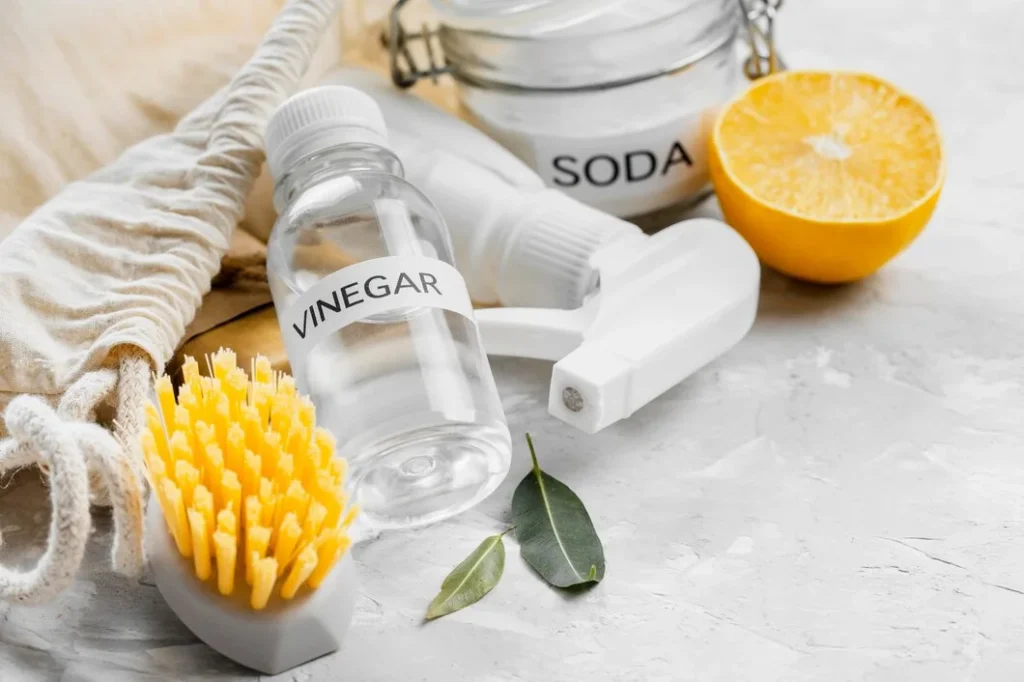
Uses for Cleaning Vinegar

  • Descalcify kettles, coffee makers, and showerheads. Soak or run a cycle with diluted cleaning vinegar to break down hard-water scale.
  • Cut the grease in the kitchen. Wipe stovetops, range hoods, and backsplashes.
  • Clean glass and mirrors. Mix with water in a spray bottle for streak-free windows and mirrors.
  • Remove soap scum. Spray on tubs, tiles, and shower doors (not natural stone!), let sit, then scrub and rinse.
  • Deodorize fridges and microwaves. Wipe down the inside surfaces with a mild solution to remove food smells.
  • Lift sticker residue. Dab undiluted cleaning vinegar on gummy spots, let sit, then rub or scrape off.
  • Freshen laundry. Add a cup to the rinse cycle for musty towels or gym clothes to reduce odor and mineral buildup.
  • Freshen drains. Pour down drains (often after baking soda) to help loosen light buildup and reduce mild smells.

Uses for Regular White Vinegar

  • General cleaner. Use white distilled vinegar for cleaning to wipe countertops, sinks, and other hard surfaces.
  • Glass and mirrors. Spray a diluted mix on windows and mirrors.
  • Limescale remover. Soak showerheads, faucets, or kettles to loosen mineral buildup.
  • Floor cleaning with white vinegar. Add a splash to mop water for sealed tile or vinyl floors.
  • Laundry helper. Use in the rinse cycle to cut odors and detergent residue.
  • Deodorizer. Set out a small bowl in a smelly room or fridge to absorb odors.
  • Cooking. Use in pickling, salad dressings, marinades, and baking for acidity and lift.

When NOT to Use Cleaning Vinegar

  • Natural stone (marble, granite, quartz, etc.). It can eat away the sealer and slowly etch the stone, leaving dull or rough spots.
  • Hardwood floors and wood furniture. The acid can damage the finish and make the wood look cloudy over time.
  • Electronics and screens (TVs, phones, laptops, monitors). Vinegar can ruin screen coatings and creep into ports and buttons.
  • Rubber seals and gaskets (washers, dishwashers, small appliances). Frequent use can dry out rubber, leading to cracking and leaks.
  • Cast iron, aluminum, and some metals. It can strip seasoning from cast iron and corrode softer metals, such as aluminum.
  • Unsealed or damaged grout. The acid can weaken grout and make it crumble instead of cleaning it.
  • Any surface recently cleaned with bleach. Never mix vinegar with bleach – together they make dangerous fumes.
vinegar for cleaning

Safety Tips for Using Any Type of Vinegar for Cleaning

When you use vinegar for cleaning, always read the label and dilute it if needed, especially with cleaning vinegar since it’s stronger than regular white vinegar. Test it first on a small hidden spot so you don’t dull wood, grout, or metal by accident. Never mix vinegar with bleach or products that might contain bleach, and don’t combine it in the same bottle with hydrogen peroxide.

Keep windows open or a fan running so the smell doesn’t bother kids, pets, or anyone with asthma. Rinse cutting boards, counters, and fridge shelves with clean water after using vinegar, and keep all bottles clearly labeled and out of reach. If you’d rather leave it to professional cleaning services, we can handle home deep cleaning services, one time house cleaning, and apartment deep cleaning services for you.

Author

  • Graymond Santos

    Graymond Santos writes the blog posts for Badger Luxe Cleaning, sharing practical tips and creative insights on cleaning and organization. He studied Electronics Engineering for two years at the Technological University of the Philippines in Manila and graduated with honors from Cavite National High School under the Science, Technology, Engineering, and Mathematics (STEM) strand. As part of a group, he contributed to Viajero, a Best Research Award-winning app that celebrates innovation, technology, and the history of Cavite. A lifelong writer and former student journalist with a focus on science and technology, Graymond brings curiosity, creativity, and thoughtful perspective to every post.

Scroll to Top

Request a free quote now

PLUS $50 off

your first service