Why Proper Cleaning of Granite Kitchen Countertops Is Important
Granite kitchen countertops need proper care because granite is a natural, porous stone. It looks solid, but it can absorb liquids and oils if the sealant is damaged or worn down. Using the wrong cleaners can break down that seal, causing damage that may be hard to fix. Harsh chemicals can also strip the shine over time. Proper cleaning granite countertops will keep the surface looking good and safe for food.
Before You Start Cleaning Granite Countertops
Check if it’s sealed. Drip a few drops of water on the surface and wait 10-15 minutes. If it darkens or soaks in, the seal may be worn.
Spot-test first. Try your cleaner on a small, hidden area (a back corner or under an appliance) and make sure it doesn’t leave visible marks.
Remove debris before wiping. Brush or wipe off crumbs and other stuff.
Use the right cloth. Grab a soft microfiber cloth or non-scratch sponge.
Don’t start with harsh products. Do not use vinegar, lemon, bleach, ammonia, window spray, or most all-purpose cleaners, since they can damage sealant.
Don’t use abrasive tools. Avoid scouring powders, rough scrub pads, steel wool, or “magic eraser” style sponges unless the label says they’re safe for natural stone.
What You’ll Need to Clean Granite Countertops
Soft microfiber cloths or a non-scratch sponge.
Mild dish soap (usually the safest and the best granite cleaner).
Warm water.
Isopropyl alcohol (70% or less, optional, used for deeper cleaning).
Bucket or small bowl.
Gloves (optional, good for tender or problematic skin).
Good ventilation (if using isopropyl alcohol).
How to Clean Granite Kitchen Countertops Daily (Step-by-Step)
Granite doesn’t need harsh cleaners to keep looking great. For everyday care, a quick wipe with gentle supplies is usually enough. But if it’s a bit too dirty or stained, some extra measures may be required. Next, you’ll see a simple step-by-step instruction on how to clean granite countertops.
Step 1 — Remove Crumbs and Loose Debris
Before you wipe anything, clear the countertop first. Sweep up crumbs, dust, and other visible stuff with a dry microfiber cloth or a soft brush. Don’t skip this, because tiny particles can scratch the surface. Make sure you hit the edges, corners, and around small appliances. If you see sticky bits, lift them with the cloth instead of scraping with something hard. Scraping is your enemy!
Step 2 — Clean with Warm Water and Mild Dish Soap
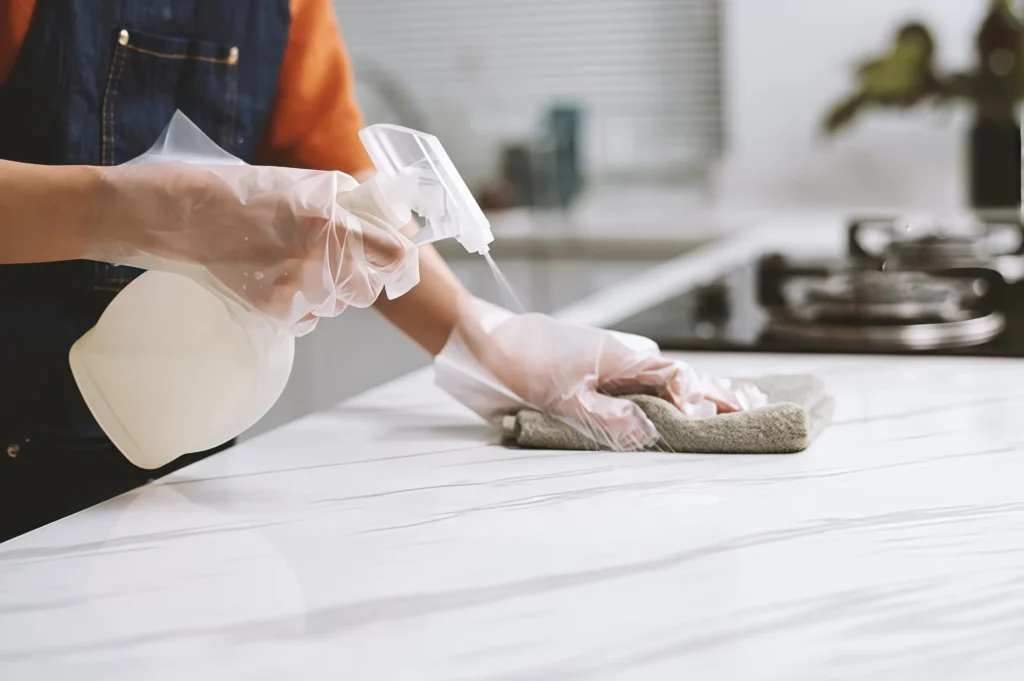
Mix a few drops of mild dish soap into warm water, then wipe the granite with a soft cloth or sponge. Don’t flood the counter. Too much water can seep into seams or around the backsplash. Don’t push too hard and don’t scrape.
Step 3 — Rinse and Dry the Surface
Use a clean, dampened cloth to wipe the countertop and pick up any remaining soap. Then dry the surface right away with a clean microfiber towel. Make sure you get into edges, seams, and the area along the backsplash where moisture likes to sit.
How to Deep Clean Granite Countertops
What is the best way to clean granite countertops if casual cleaning doesn’t help? First, clear the counter and wipe away crumbs.
Mix a gentle spray in a bottle: warm water, a few drops of mild dish soap, and isopropyl alcohol (70% or less). Lightly mist the countertop and let it sit for 3-5 minutes. Wipe with a soft sponge or microfiber clothю
Finish by wiping once with clean water, then dry right away with a fresh microfiber towel. Enjoy your clean granite countertop! But if it’s still not as clean as you’d like, repeat the process.
Products and Ingredients to Avoid on Granite Countertops
Vinegar. The acid can dull the finish and slowly wear down the sealant.
Lemon juice and other citrus cleaners. Same problem as vinegar.
Acidic bathroom cleaners and descalers. These are made to dissolve mineral buildup, and they can etch or discolor stone and strip sealant.
Bleach. It’s harsh, can weaken the sealant, and may cause fading.
Ammonia-based cleaners and many glass sprays. They can break down the sealant.
Abrasive powders and rough scrubbers. They can scratch the surface and take away the shine.
Sealing Granite Countertops: Why It Matters
Granite is a natural stone with tiny pores. A good sealer fills those pores so liquids don’t soak in. That helps prevent common kitchen stains from things like coffee, wine, oil, sauces, and juice. It also makes daily wiping and cleaning granite countertops much easier.
Note that sealing doesn’t make granite stain-proof. It protects your countertop pretty well, but it has its limits. If water stops beading on the surface and starts darkening the stone, it’s usually time to reseal.
Simply put, sealing is like a protective coat for your countertop, like PFP for your car or a raincoat for you.
How Often Should You Seal Granite Kitchen Countertops?
Most granite kitchen countertops need resealing about once a year, but it really depends on two things. The first is the sealer’s quality. Better sealers usually last longer. The second is how you use the countertop. If it sees heavy (by heavy, we mean messy) daily use, it may need resealing sooner.
A simple way to check is to use a water test. Put a few drops of water on the granite and wait about 15-20 minutes. If the water still beads up, the seal is doing its job. If the water soaks in and darkens the stone underneath, it’s a clear sign the granite is absorbing moisture, and it’s time to reseal.
How Often Should You Clean Granite Countertops?
Wipe the surface after each use. A quick wipe with a soft cloth and warm water (or a little mild dish soap) is all it needs. If you leave food or liquids sitting there, it usually turns into a tougher mess later.
Do a slightly deeper clean about once a week or every two weeks. This is a good time to clean granite countertops. If you barely cook, once a month can be enough. If you cook daily or the counter gets messy fast, do it weekly.
The simplest rule is to clean granite more often when the countertop is used more.
Tips to Keep Granite Countertops Looking New Longer
Wipe spills right away. Use warm water, a little mild dish soap, and a soft cloth.
Do not use harsh stuff. Vinegar, lemon juice, bleach, ammonia, and many all-purpose sprays can wear down the sealer, leaving the granite looking dull.
Use protection. Cutting boards are obviously helpful, and trivets/coasters help avoid heat marks and rings.
Don’t scrub with abrasive pads. Use soft sponges or microfiber instead, to avoid tiny scratches.
Disinfect granite countertops occasionally (not after every use). An alcohol-and-water mix can sanitize and help the surface look brighter without being too aggressive.
Keep an eye on the sealer. If a few drops of water darken the stone, it’s time to reseal.
When to Call a Professional Stone or Cleaning Service
If you just can’t remove stains from granite, it’s a good time to call cleaning professionals. The same goes for dull spots, rough patches, or cloudy areas that won’t go away even if you try, since scrubbing harder can damage the sealer or the finish. You’ll also want help if you’re not sure what caused the mark (oil, rust, hard water, food dye), because each one may need a different approach.
If you want your counters cleaned properly without damaging them, Badger Luxe can help with home cleaning services, including kitchen cleaning services as part of a standard cleaning service or a more detailed house deep cleaning service if you need help beyond your countertop. Don’t just scrub harder; it won’t help. If nothing works, call professionals.
Graymond Santos writes the blog posts for Badger Luxe Cleaning, sharing practical tips and creative insights on cleaning and organization. He studied Electronics Engineering for two years at the Technological University of the Philippines in Manila and graduated with honors from Cavite National High School under the Science, Technology, Engineering, and Mathematics (STEM) strand. As part of a group, he contributed to Viajero, a Best Research Award-winning app that celebrates innovation, technology, and the history of Cavite. A lifelong writer and former student journalist with a focus on science and technology, Graymond brings curiosity, creativity, and thoughtful perspective to every post.