Popcorn ceilings are the bumpy, textured ceilings you see in many older homes. The texture looks fine, but it’s a dust magnet. All the little bumps catch dust, cobwebs, and sometimes greasy film (especially near kitchens). Stains can show up, too, like water spots or discoloration from humidity.
The problem is that the texture can be fragile. Scrubbing hard with rough tools or soaking it in water can make it crumble or flake off, and once that happens, it’s hard to hide. Also, if your home is older, it’s smart to be cautious. Some older popcorn ceilings may contain asbestos, so you’d want to leave them where they are. Gentle cleaning is the best way to avoid damage.
How Often Should You Clean a Popcorn Ceiling?
Popcorn ceilings don’t need frequent cleaning, and in most rooms, less is better. In bedrooms, living rooms, and hallways, a light cleaning once every year or even every couple of years is usually enough, as long as there’s no visible dirt.
Kitchens need more attention. Cooking creates grease and steam, which makes dust stick faster, so a gentle clean twice a year makes sense. Bathrooms may also require more frequent checks, as humidity can cause stains or mildew over time.
Laundry rooms or homes with pets may need slightly more frequent cleaning, since lint and hair can travel upward. Overall, only clean when you actually see dirt. Overcleaning is pointless.
Important Considerations Before You Start
The texture is fragile, so even light pressure can cause it to crumble or flake. Avoid soaking it with water. Too much moisture can loosen the material, leaving visible damage.
If your home was built before 1980, be cautious. Some older popcorn ceilings may contain asbestos, and cleaning can release harmful particles into the air. In that case, testing the ceiling or calling professional apartment cleaning services is the safer option.
Always test your cleaning method on a small, hidden area first. If the texture starts falling off or looks damaged, stop. And if the ceiling is stained, heavily soiled, or already breaking down, it’s best not to clean it yourself. Better safe than sorry, right?
What You’ll Need to Clean a Popcorn Ceiling
Plastic drop cloths or tarps. To cover floors and furniture from falling dust and debris.
Face mask or respirator. Safety first!
Safety goggles. Protects your eyes from debris falling from the ceiling.
Step ladder. So you can reach the ceiling.
Vacuum with a brush attachment. For gently removing loose dust without scraping the texture.
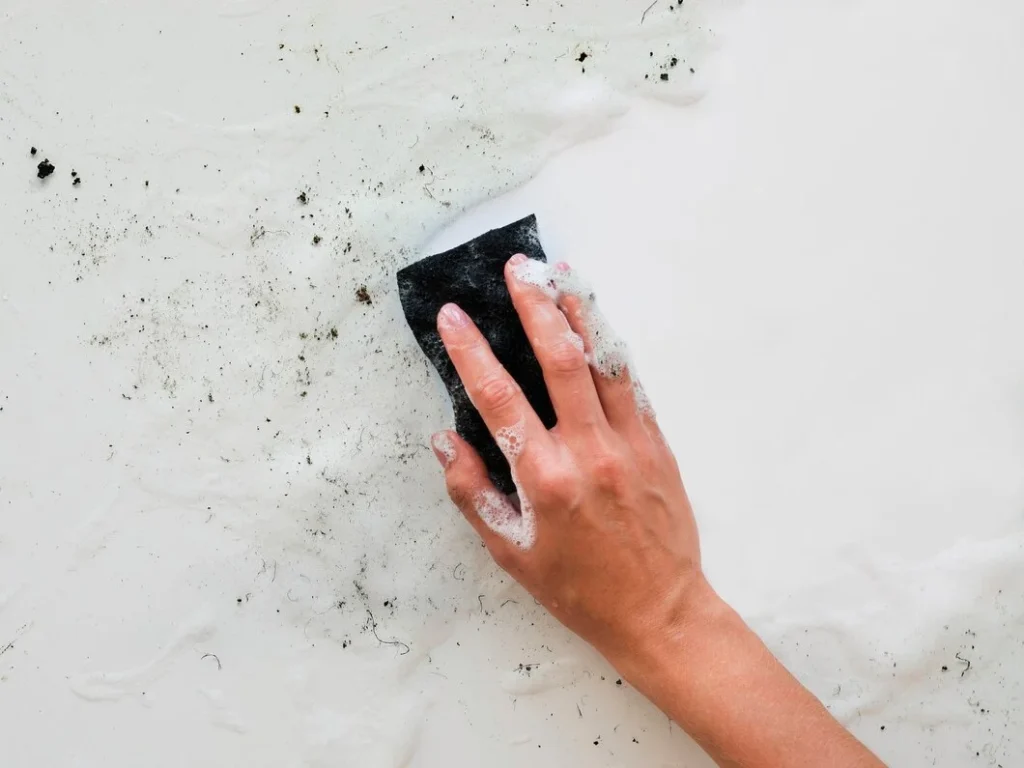
Sponge or soft cloth. For light spot cleaning, use it very gently.
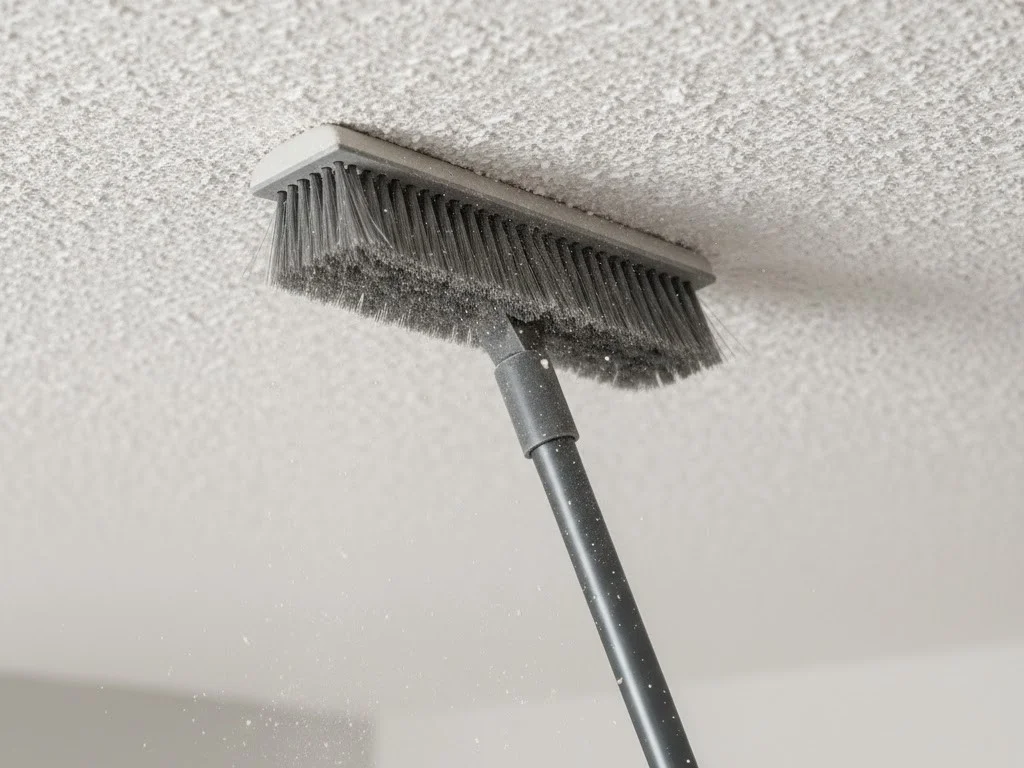
Broom or soft ceiling brush. Optional, for dry dusting if used carefully.
Lint roller or duct tape. Useful for picking up surface dust in small areas, but use with caution to avoid pulling texture off.
Best Dry Cleaning Methods for Popcorn Ceilings
Dry cleaning is usually the safest way to clean textured ceilings. These techniques focus on gently lifting and removing dust without rubbing or soaking the surface, since water can make it even more fragile. Below, we’ll tell you about the best and safest methods. So, how to clean popcorn ceiling?
Method 1: Cleaning a Popcorn Ceiling with a Lint Roller
A lint roller is the best way to clean a popcorn ceiling, especially if the ceiling is low and you’re dealing with light dust or pet hair. Use a lint roller with an extension pole so you don’t have to climb a ladder. Start by testing a small, hidden spot to make sure the adhesive doesn’t pull the texture off. If it looks fine, roll gently in straight lines. Don’t press hard, be gentle! Replace the sticky sheets as they fill up, and work section by section so you don’t miss areas. Always choose a lint roller first; it’s an easy way to clean a popcorn ceiling.
Method 2: Vacuuming a Popcorn Ceiling
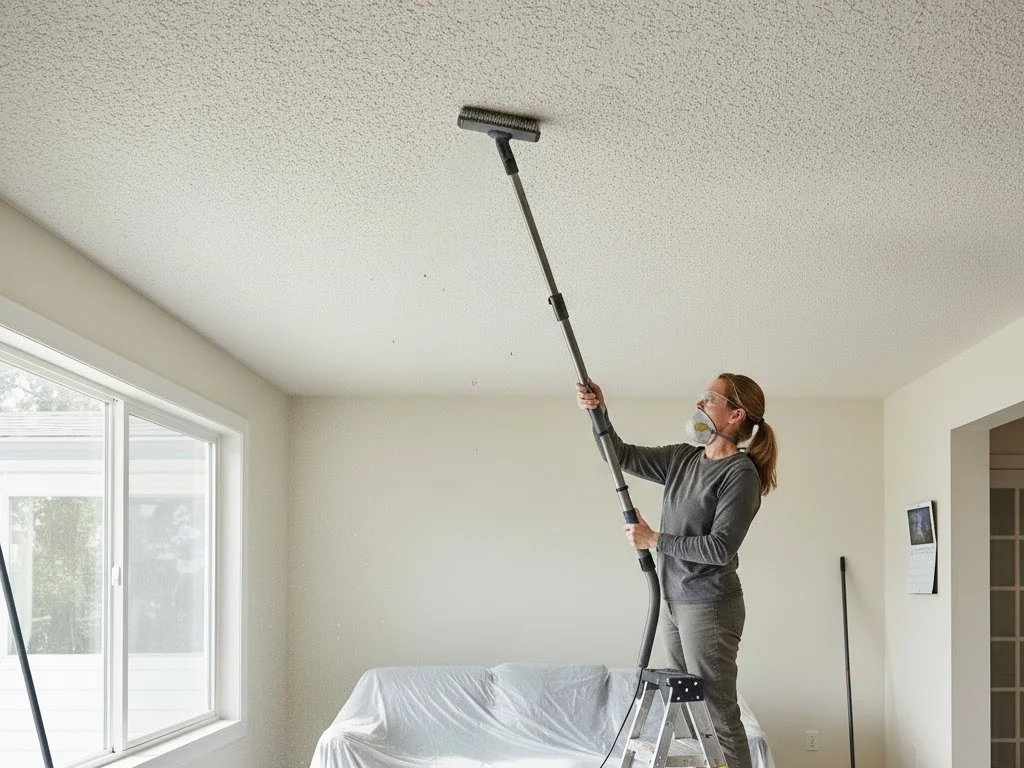
Use a vacuum with a soft-brush attachment and a telescoping wand so you can reach the ceiling without pressing hard. Work slowly and keep the suction gentle to avoid pulling the texture off. Lightly glide the brush over the surface instead of scrubbing. If you need a ladder, make sure it’s stable and positioned safely. This method works best for routine maintenance and lightly dirty popcorn ceilings. But it won’t really work for stains or heavy buildup.
Method 3: Using a Microfiber Duster
Choose an extendable duster with a flexible head so you can reach the ceiling without pressing hard. Gently glide the duster across the surface, letting it lift dust instead of scraping the texture. Move slowly and gently, as the fibers can catch on the bumps. Shake or clean the duster often so you’re not spreading dust around. This method is best for regular upkeep, but won’t handle heavy dirt.
How to Clean Stains on a Popcorn Ceiling
You need to be very careful, because the texture can break or fall off easily. First, figure out what caused the stain, such as a roof leak, plumbing issue, or condensation. If the source isn’t fixed, the stain will come back regardless of what you do.
For light water stains, mix a small amount of bleach with water in a spray bottle (about one part bleach to three parts water). Lightly mist the stained area, but do not scrub or rub. Spray once a day and let it dry completely between applications. Also, open a window or use a fan.
If the stain doesn’t fade after a few days, cleaning a popcorn ceiling may not help. In that case, covering the spot with ceiling paint or calling professional cleaning services is usually the better option.
Can You Use Water or Wet Cleaning on a Popcorn Ceiling?
In most cases, water or wet cleaning is not recommended for popcorn ceilings. The textured material absorbs moisture readily, which can make it even more fragile. Even a small amount of water can damage the surface if you rub or scrub it.
Light moisture, like a fine mist, can sometimes be used for stain treatment, but only carefully and in small areas. You should never soak the ceiling or wipe it with a wet cloth. Too much moisture can also cause peeling, discoloration, or mold on the popcorn ceiling.
If your popcorn ceiling is old, especially in homes built before 1980, wet cleaning can also be risky due to the potential for asbestos contamination. When in doubt, dry popcorn ceiling-cleaning methods or professional help are the safest choices.
Tips to Keep a Popcorn Ceiling Clean Longer
Prevention is usually a better option. The less dust and dirt that reaches it, the less often you’ll need to touch it.
Start by dusting regularly using dry methods, such as a vacuum with a brush attachment or a microfiber duster. This keeps dust from building up and sticking to the texture. Change the air filters in your HVAC system regularly, as dirty filters let more dust into your home.
In kitchens and bathrooms, try to lower the moisture. Use exhaust fans when cooking or showering to prevent steam and residue from rising and sticking to the ceiling. Fix leaks quickly, as water stains are pretty hard to remove.
Avoid smoking indoors and limit the use of candles, because smoke leaves a residue that is very hard to remove. Finally, resist the urge to touch or scrub the ceiling for obvious reasons.
When to Call a Professional Ceiling or Cleaning Service
If you’re not sure what your popcorn ceiling is made of, how fragile it is, or how to clean the ceiling safely, it’s smarter to call a professional before you start. One wrong move can turn a small dusty spot into a patchy ceiling that needs repair.
You should also bring in pros in Green Bay, WI, if you already tried cleaning and damaged the texture, created bald spots, or spread stains. At that point, doing one more round will only make it worse. A professional ceiling-cleaning service can handle it properly without damaging your ceiling.
Graymond Santos writes the blog posts for Badger Luxe Cleaning, sharing practical tips and creative insights on cleaning and organization. He studied Electronics Engineering for two years at the Technological University of the Philippines in Manila and graduated with honors from Cavite National High School under the Science, Technology, Engineering, and Mathematics (STEM) strand. As part of a group, he contributed to Viajero, a Best Research Award-winning app that celebrates innovation, technology, and the history of Cavite. A lifelong writer and former student journalist with a focus on science and technology, Graymond brings curiosity, creativity, and thoughtful perspective to every post.