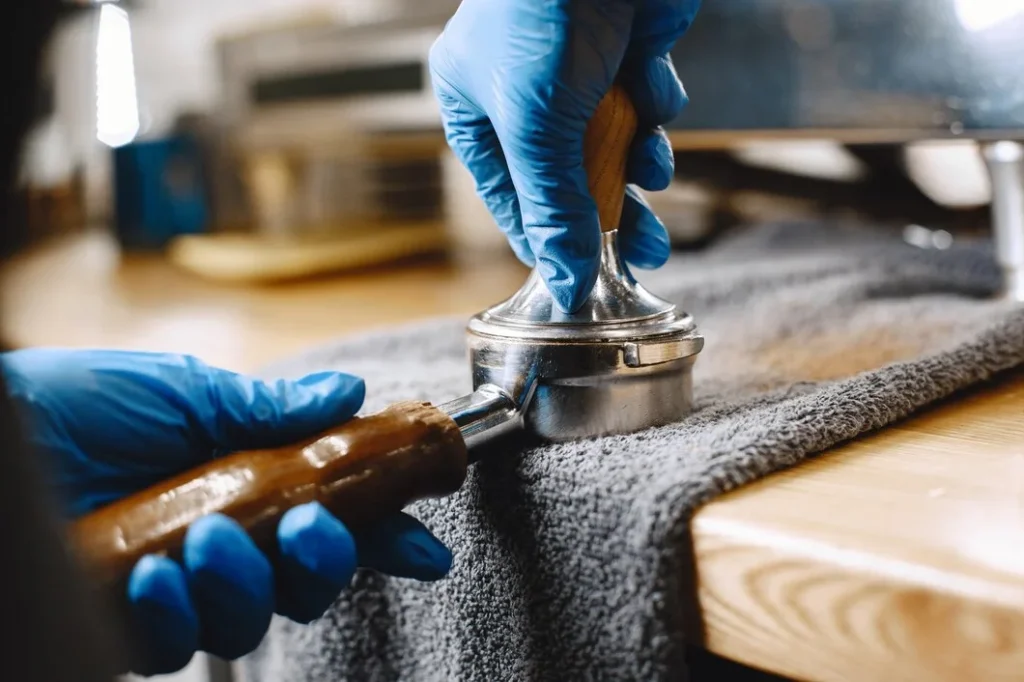
How to Clean Your Keurig Coffee Machine

Cleaning ServicesBlogHow to Clean Your Keurig Coffee Machine
descale keurig

Why Regular Keurig Cleaning Matters

Over time, every cup you brew leaves a little coffee oil and mineral residue inside your Keurig. That buildup sticks to the tubing, needles, and water lines, making your coffee taste bitter or weird, even if you use fresh pods. Limescale from hard water can also slow the brew, make the machine noisy, or even clog it entirely if you ignore the issue long enough.

A dirty reservoir and warm, damp areas are good places for germs to grow. You don’t want that in your coffee, do you? So, how to clean a coffee maker?

Cleaning vs. Descaling a Keurig — What’s the Difference?

Cleaning a Keurig and descaling a Keurig are not the same thing. Cleaning focuses on removing coffee oils, dust, and germs from the outside and removable parts: the drip tray, pod holder, water tank, and surfaces you touch every day. You use soap, water, and a soft cloth for this.

Descaling targets the mineral buildup in the machine’s water lines and heater caused by hard water. Descale on a schedule (or when the machine slows down) to keep it heating and pumping water properly.

How Often Should You Clean and Descale Your Keurig?

Rinse and wipe removable parts after each use, and give the pod holder, drip tray, and water tank a soapy wash about once a week. Descale the machine every 3-6 months, or more often if you have hard water or make several cups a day. If the brewer runs slower, gets noisy, or your coffee tastes flat or bitter, that’s a sign it’s time to descale even sooner. Regular cleaning and periodic descaling keep the flavor fresh and help your Keurig last longer.

how to clean a keurig

What You’ll Need to Clean Your Keurig

  • Fresh water
  • White vinegar
  • Mild dish soap (for hot soapy water)
  • Soft sponge or non-abrasive cloth
  • Damp dish towel
  • Dry dish towel

How to Clean Your Keurig Coffee Machine (Full Cleaning Guide)

A Keurig is easy to use, but it still needs a regular deep clean to keep your coffee tasting fresh. Old coffee oils, minerals from water, and dust can build up inside the machine, slowing it down and adding bitter or musty flavors to every cup. How to clean a Keurig?

Step 1 — Unplug and Disassemble the Keurig

Turn the Keurig off and unplug it so you’re not working around live electricity. Let it cool if it was just used. Remove the water reservoir, lid, and drip tray, then take out the K-cup holder and funnel if your model allows. Set all loose parts aside near the sink.

Step 2 — Wash All Removable Parts

Check your manual if you’re unsure what can be washed manually. Usually this includes the water tank and lid, drip tray and cover, and K-cup holder with funnel. Wash everything in warm, soapy water using a soft sponge, then rinse well until no soap remains. Let the parts air-dry completely on a clean towel so no extra moisture goes back into the machine.

Step 3 — Clean the Keurig Needle (Very Important!)

The needle is where water flows through the K-cup, so it easily clogs with coffee grounds. With the Keurig unplugged, remove the pod holder and look for the small entrance and exit needles. Use the official needle-cleaning tool or a straightened paperclip to gently loosen any buildup in each hole. Rinse the pod holder under running water, wipe around the needle area with a damp cloth, then put everything back in place.

Step 4 — Wipe the Exterior and K-Cup Holder Area

Use a soft, damp cloth to wipe down the outside of your Keurig, including the top, sides, buttons, and drip tray area. Take out the K-cup holder and carefully wipe around the opening where pods sit, since grounds often collect there. Avoid getting water in the control panel or power area, and never submerge the machine in water.
How to Descale Your Keurig (Deep Cleaning Method)

Descaling helps remove buildup inside the machine that regular cleaning can’t reach. WIth time, minerals from water settle in the internal lines and heating element, which can slow brewing, affect taste, or stop the machine from working properly if you ignore the issue for too long. How to descale keurig?

Option 1 — How to Descale a Keurig with Vinegar

Descale keurig with vinegar is a common and effective method. If you want to descale keurig with vinegar, start by emptying the Keurig and removing any filters. Fill the water tank with a mix of vinegar and water, then run a brew cycle. Halfway through, pause the machine and let the solution sit so it can descale keurig with vinegar. Finish the cycle, then run a few cycles with fresh water to rinse out any vinegar taste or smell. After that, reassemble the machine.

Option 2 — How to Descale a Keurig Using Descaling Solution

Descale the Keurig by emptying the machine and removing any filters. Pour the descaling liquid into the tank, then add water as directed on the product label. Run a brew cycle and pause the machine halfway through to let the solution sit. Once the cycle finishes, flush the machine by running several cycles with clean water until there’s no smell or taste left. After rinsing, put everything back in place.

Keurig Maintenance Tips to Keep It Clean Longer

To keep your Keurig clean longer, use filtered water if possible. It can help reduce mineral buildup, so the machine doesn’t need to be descaled as often. Cleaning removable parts regularly also makes a difference, especially the K-Cup holder and drip tray. Avoid letting old coffee grounds sit too long, since they can cause odors and residue.

If your machine has a water filter, replace it on schedule. Running a plain water brew every so often can also help with leftover oils. Small habits like these help the machine run smoothly and keep your coffee tasting fresh.

Common Keurig Cleaning Mistakes to Avoid

People sometimes damage their Keurigs by skipping the manual and relying on random online advice. Each model may need slightly different care, so checking instructions helps a lot. Another common mistake is using harsh chemicals or bleach, which can leave residue and affect flavor. The same goes for scrubbing with abrasive pads or brushes that can scratch plastic parts.

Some people forget to rinse after descaling, which leaves a strong aftertaste in the coffee. Letting the water tank sit with old water for days also causes foul odors. If maintaining appliances feels overwhelming, scheduling home cleaning services or even pairing routine care with standard cleaning or a deep cleaning service can help keep things clear.

Author

  • Graymond Santos

    Graymond Santos writes the blog posts for Badger Luxe Cleaning, sharing practical tips and creative insights on cleaning and organization. He studied Electronics Engineering for two years at the Technological University of the Philippines in Manila and graduated with honors from Cavite National High School under the Science, Technology, Engineering, and Mathematics (STEM) strand. As part of a group, he contributed to Viajero, a Best Research Award-winning app that celebrates innovation, technology, and the history of Cavite. A lifelong writer and former student journalist with a focus on science and technology, Graymond brings curiosity, creativity, and thoughtful perspective to every post.

Scroll to Top

Request a free quote now

PLUS $50 off

your first service